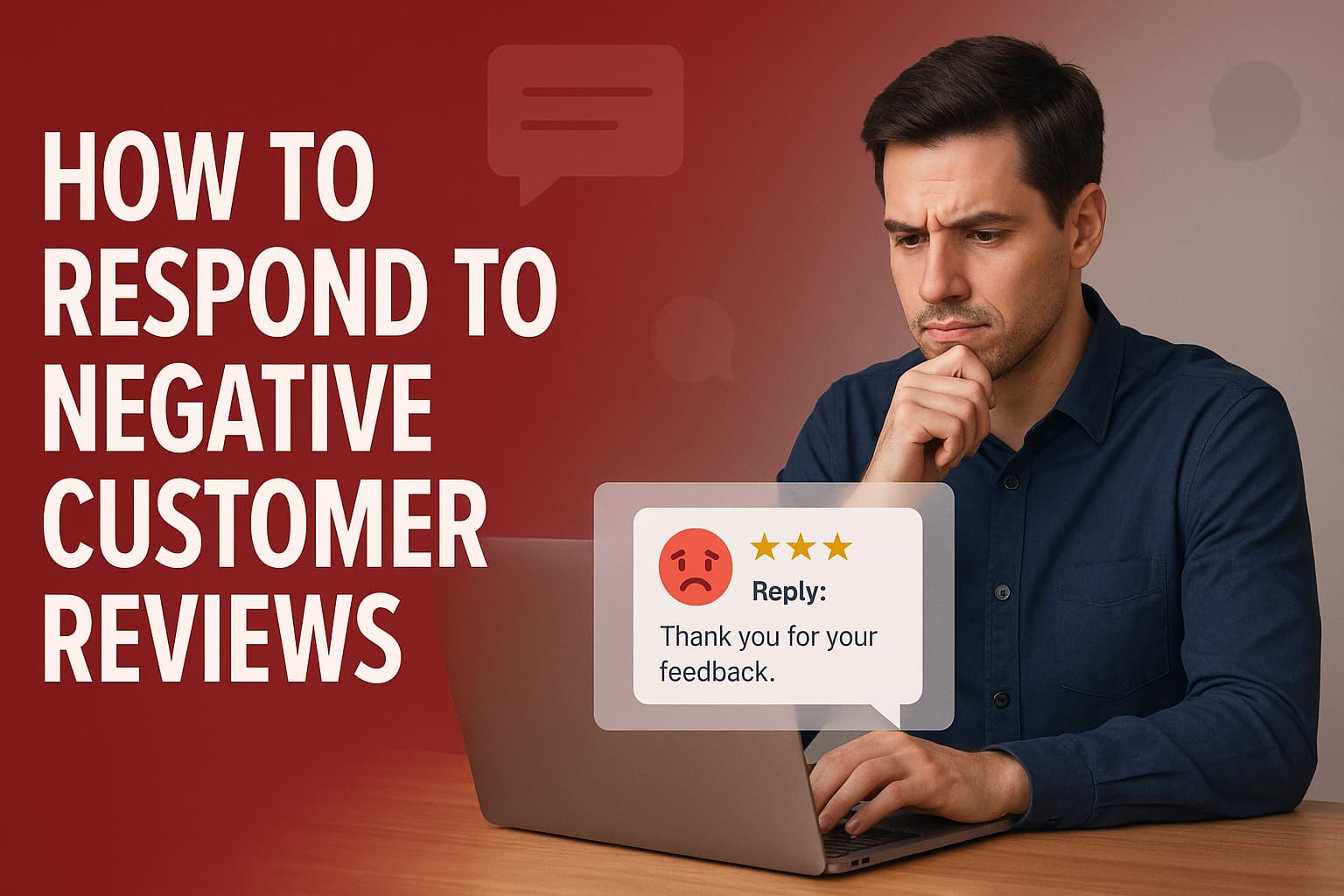
This article explores how to respond to negative customer reviews. Find out the best way to look professional as a local business when customers leave a bad review.
Negative reviews are an inevitable part of running any business, even for the most beloved local shops and services.
Whether you manage a café, a plumbing service, or a boutique in the UK, at some point you’ll encounter negative customer reviews from unhappy customers on Google reviews, Noticed UK, Facebook, Yelp reviews, TripAdvisor, or another platform.
Seeing a scathing one-star review can sting – after all, you pour your heart into your business. But how you respond to negative reviews can make all the difference.
Handled with care, even bad reviews are not dead-ends; they’re opportunities to provide excellent customer service, rebuild trust, and show potential customers that your business values customer feedback.
In this guide, we’ll explain why review responses matter, what mistakes to avoid, and step-by-step best practices. You’ll also see negative review response examples and response templates to help you craft responses that strengthen customer relationships and protect your brand reputation.
Why Responding to Negative Reviews Matters
Online reviews influence nearly every purchase decision today. Research shows that almost nine in ten consumers check reviews before choosing a product or service.

That means a single negative online review can quietly turn away potential customers. For a business owner, that one-star review on your Google Business account or Facebook business page might carry more weight than dozens of positive comments.
But here’s the good news: businesses that respond to negative reviews in a professional manner can actually attract more sales. When businesses respond promptly to customer complaints, they demonstrate responsibility and care. Customers tend to view thoughtful review responses as a sign of excellent service and commitment to customer satisfaction.
Positive and negative reviews together give other customers a fuller picture of what to expect. Most consumers know that no company is perfect, and seeing how businesses respond to reviews – especially the bad ones – shows authenticity and professionalism.
Responding effectively builds trust and reassures potential clients that your company will provide solutions if something goes wrong.
From an SEO perspective, responding to reviews on Google, Yelp reviews, and other review sites also supports your online reputation. Google search results often highlight businesses that engage with reviewers, and more reviews (both positive and negative) signal credibility.
In short, responding to a negative review is not just about damage control; it’s one of the best practices for reputation management, customer engagement, and strengthening customer relationships over the long run.
Mistakes to Avoid When Facing a Negative Review
Before diving into how to respond to negative reviews effectively, it’s important to understand what not to do. Many business owners have reacted poorly to negative feedback and ended up making things worse.
Ignoring reviews:
Failing to respond sends a clear message that you don’t care about customer opinions. Businesses respond publicly not just for one reviewer, but for all other potential customers who are reading. A lack of engagement erodes customer loyalty and trust.
Getting defensive or rude:
Arguing with a negative reviewer or angry customer online may feel tempting, but it damages your brand reputation far more than the original negative comments. Respond tactfully, with empathy, not excuses.
Deleting reviews:
Unless a review clearly violates policies, don’t try to hide it. Consumers often distrust businesses that show only 5-star review ratings.
In fact, the presence of both negative and positive reviews gives your profile authenticity. A professional reply to a bad experience is better for your online reputation than removing it.
Remember: every review response is visible to other potential customers. Instead of escalating conflict, stay calm, show understanding, and use the opportunity to provide constructive feedback to your team.

How to Respond to Negative Reviews (Step by Step)
When receiving negative feedback, having a clear plan ensures you respond to negative reviews in a professional manner. Here’s a practical framework with review response examples and templates:
Stay Calm – Don’t reply in anger. Take a breath, collect your thoughts, and prepare to respond professionally. Responding effectively means avoiding defensive emotions.
Respond Promptly – Post your response in a timely manner, ideally within 24–48 hours. Customers expect businesses to respond quickly. A prompt reply shows your support team or customer care team takes feedback seriously.
Acknowledge and Apologise – Begin with empathy. Example:
“Dear customer, thank you for bringing this to our attention. We’re sorry to hear about your recent experience. We sincerely apologize that our service fell short of expectations.”
Using the customer name where possible adds a personal touch.
Take the Conversation Offline – Suggest taking things offline to resolve the matter. Offer direct contact information such as an email or phone number. Example:
“Please contact us directly at [contact info] so our customer service team can assist you further.”
This shows responsibility while preventing a public back-and-forth.
Offer Solutions – Whether it’s a refund, replacement product, complimentary service, or discount on a next purchase, offer fair remedies. Offering solutions demonstrates providing excellent customer service and a genuine commitment to customer satisfaction.
Follow Up – After resolving the issue privately, add a short public comment noting the resolution in more detail without disclosing sensitive information. This demonstrates transparency and professionalism.
Example 1:
“Dear Sarah, thank you for taking the time to share your feedback. We’re sorry to hear about such a negative experience. Please contact us directly at [phone number] so we can offer solutions and make things right.”
Example 2:
“Hi James, we appreciate your honest feedback. We regret the inconvenience caused by our delivery service delay. Please contact us directly so our customer support team can arrange a replacement product and ensure a better service next time.”
Using response templates like these provides a great starting point for crafting your own responses. They help ensure you cover the essentials – empathy, apology, a solution, and a personal touch – without sounding like canned responses.
Turning Negatives into Positives
Handled well, a negative review response can generate a positive outcome. For instance, businesses respond with empathy, offer fair and competitive pricing adjustments, or invite dissatisfied customers to give the company a second chance. Often, customers who feel heard will turn into loyal advocates.
In fact, research shows that when companies effectively respond to negative reviews, they can increase customer loyalty, encourage happy customers to leave positive reviews, and boost financial outcomes.
Even business negative reviews can highlight valuable insights that lead to necessary improvements in quality control, inventory up to date, or delivery service standards.
Showing appreciation to customers who leave feedback – whether it’s positive feedback or negative feedback – creates valuable engagement.
Customers opinions matter, and when they see you taking steps and taking action, they’re more likely to give you more feedback in the future. This strengthens trust with both new customers and loyal ones alike.
Encourage More Positive Reviews
One of the best practices for protecting your online reputation is to collect more reviews from happy customers.
A steady stream of positive reviews pushes older bad reviews down in the reviews tab and improves search engine rankings.
Encourage satisfied customers to leave feedback on Google Maps, Yelp, or Facebook. For example, after a dining experience or hotel stay, you can send a quick email thanking the guest and including direct contact information or a link to your reviews tab. The easier it is, the more reviews you’ll receive.
Also, don’t forget to respond to positive reviews. A quick “thank you for bringing your business to us” or “we’re glad you enjoyed your recent experience” shows appreciation and helps build trust. These small actions reinforce a positive image for your company and promote stronger customer relationships.
Handling Fake or Unfair Reviews (When to Escalate)
Not all negative reviews are genuine. Sometimes a negative google review or negative Facebook review might come from someone who never purchased your product or service.
In these cases, use reputation management tools provided by review sites. Google, Yelp reviews, and TripAdvisor all allow a business owner to dispute fraudulent reviews.
While waiting for moderation, you should still respond professionally.
Example:
“Dear customer, we’re sorry to hear about your complaint. Unfortunately, we can’t find any record of your booking under this name. Please contact us directly with more detail so we can investigate further.”
This approach demonstrates professionalism and assures potential customers that you take every concern seriously.

Only in rare situations – such as defamatory or clearly false reviews harming brand reputation – should legal companies or hr team members get involved.
For the vast majority of cases, the best practice is to respond tactfully, show a sincere apology if needed, and invite the reviewer to provide more insight or additional feedback privately.
How to Respond to Negative Customer Reviews: Conclusion
No small business can avoid negative customer reviews altogether. But what truly matters is how businesses respond.
A strong, professional response demonstrates your commitment to providing excellent customer service, maintaining high standards, and valuing every piece of feedback.
To recap:
- Respond to reviews promptly, in a professional manner.
- Apologize sincerely and say “we’re sorry to hear” when appropriate.
- Offer solutions and take the conversation offline with direct contact information.
- Follow up publicly to show resolution.
- Encourage happy customers to leave more reviews.
This proactive strategy turns dissatisfied customers into loyal ones, improves customer engagement, and enhances your overall customer experience. It also reassures other potential customers who are reading reviews on Google or Yelp that your business is committed to customer satisfaction.
Handled thoughtfully, even bad experiences can lead to a positive outcome. Negative and positive reviews together give a real picture of your company, and responding effectively builds trust, loyalty, and a strong reputation for the future.
Want More Positive Reviews for Your Local Small Business?
Join the Noticed UK business directory today and make it easier for happy customers to find you, share their experiences, and leave glowing reviews.
Adding your business takes just minutes – and it’s the first step to building a stronger online reputation, attracting new customers, and standing out in your community.
Add your business to our directory now and start getting more positive reviews!
References and Sources:
1st Formations Blog – “How to respond to negative customer reviews” (examples of what not to do and the Glasgow hostel story)
ReviewTrackers – “Powerful Examples of How to Respond to Negative Reviews” (statistics on consumer expectations and behaviour regarding bad reviews)
BrightLocal – “How to Respond to Negative Reviews Online on Google and Beyond” (benefits of responding vs. not responding; steps to handle negative feedback)
UK Competition & Markets Authority (Gov.uk) Press Release, 24 Jan 2025