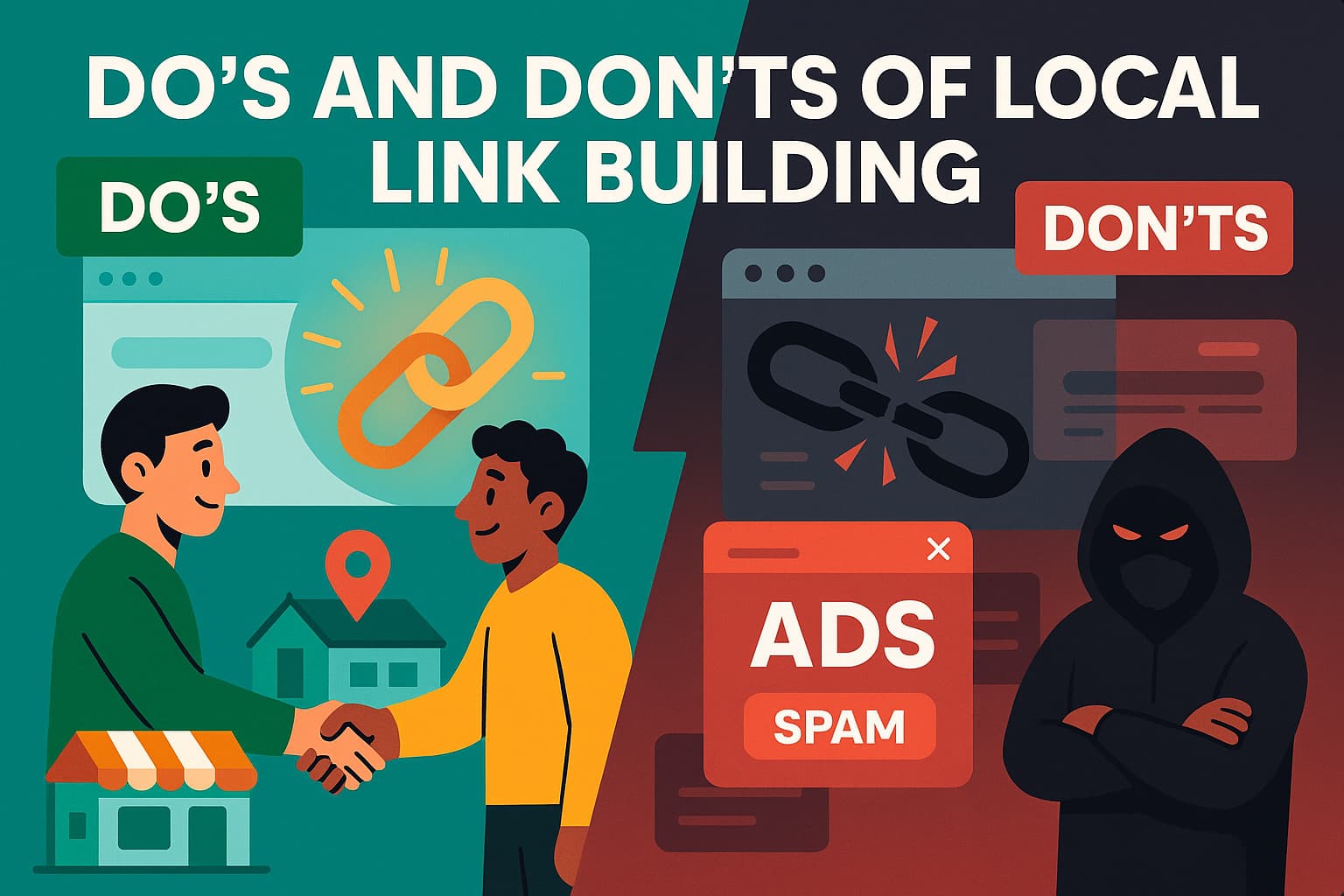
This article examines the do’s and don’ts of local link building. Find out how to boost your link building process.
If you run a small business in the UK, you’ve probably heard that having a website is important. But simply having a website isn’t enough – potential customers need to find it.
One of the most effective ways to achieve this is through local link building. In simple terms, this means encouraging other websites in your community or industry to provide links back to your site. Every link acts like a signal, directing both users and search engines towards your business.

When a respected local site publishes a link to you, it’s a strong sign of trust that can improve your website’s authority and rankings. This guide explores what local link building is, why it matters, and the do’s and don’ts that help you avoid costly mistakes.
With clear examples, practical link building tips, and straightforward advice, you’ll be able to start building links that benefit your website’s ranking, your brand, and your community.
What Is Local Link Building?
Local link building is the process of earning backlinks (clickable links from other websites to yours) from local websites and resources that are relevant to your local area.
This could mean getting links from local businesses, local bloggers, local directories, or even local news sites. For example, a law firm in Bristol that’s listed on a local chamber directory or featured on a Bristol parenting blog has earned valuable local backlink opportunities.
Unlike traditional link building strategies that chase national or global exposure, local link building narrows the focus to the local search results that matter most to your target audience.
This approach aligns with local SEO practices, helping search engines connect your website with the community you serve.
By building relationships with community organizations, local bloggers, and other local businesses, you increase your chances of creating quality local links that boost local search rankings.
Why Local Links Matter
Building links isn’t just a technical exercise – it directly benefits your business. Here’s why local backlinks are so powerful:
Higher Local Search Rankings
Search engines rely on links as signals of trust. When multiple relevant websites connect to your website, they indicate credibility. Backlinks are among the key factors that determine your site’s ranking in search engine results pages.

Even Google highlights that the number of links to your website can enhance your prominence in local search results and help you appear in the local pack. More quality links mean better visibility and the chance to improve rankings.
More Local Traffic and Customers
Every local backlink acts as a pathway for potential customers. For example, if a local blogger writes a blog post about your services and adds a link, their audience may click through to your website.
Because these links come from sources in your local area, the traffic is more targeted, with higher chances of converting into clients. This type of valuable backlink directly connects you with customers who live or work nearby.
Credibility and Community Trust
Being mentioned by community groups, local media, or the local chamber enhances your reputation. When other local websites or organizations link to your website, it signals to search engines and users that you are a trusted part of the community.
A law firm listed on a local directory, for example, gains both credibility and visibility. These quality local links can also generate brand awareness – even if someone doesn’t click the link immediately, the mention reinforces your presence.
In short, local link building strengthens your backlink profile, increases traffic, and builds long-term authority.
Do’s of Local Link Building
When it comes to local link building, some strategies work particularly well. Here are the “do’s” – things you should do to gain valuable local links and strengthen your online presence in your area:
Do Get Listed On Local Directories And Listings
Start by adding your business profile to local directories and claiming your Google Business Profile. These links provide immediate SEO benefits and ensure accurate data like your address and city details are consistent. For example, many local directories allow you to create backlinks while making it easier for customers to find you.
Do Engage With Local Community Websites, Blogs, And Press
Collaborate with local bloggers, contribute to local blogs, and send press releases to local news sites. Getting featured on local media builds quality links and offers digital PR opportunities. Sharing engaging content that provides value increases your chances of being mentioned by relevant websites.
Do Create Useful Local Content
Publishing fresh content like guides, case studies, or infographics tailored to your local area encourages backlinks. For example, a law firm might publish a blog post on “Legal Rights for Tenants in London.” By creating quality content, you provide valuable content that attracts links naturally and improves your website’s ranking.
Do Build Partnerships With Other Local Businesses And Organisations
Work with other local businesses, community organizations, or community groups to discover sponsorship opportunities. For example, sponsoring a local event often results in clickable links from the organiser’s website. These partnerships enhance your backlink profile and help you generate new opportunities for building links.
Do Encourage Customer Reviews
Ask happy customers to leave reviews on sites like Trustpilot or Yelp. These platforms typically allow a link back to your website, boosting your reputation while adding quality links. Positive reviews can also attract other businesses or bloggers looking for trustworthy companies to feature.
Do Track Competitors’ Backlinks
Monitor competitors’ backlink profiles to identify link opportunities you may have missed. For example, if a competitor gains a link from a local directory or community organization, you can request a similar link. Analysing their domain authority, strategies, and profile gives you actionable insights.
Do Make Sure Your Website Is Link-worthy
Having high quality links pointing to a poor website is a waste. Ensure your website has relevant content, is easy to navigate, and provides valuable content for readers. A professional, polished website with quality content increases the likelihood of earning the best links.
Don’ts of Local Link Building
Just as there are best practices to follow, there are also common mistakes you should avoid. The following are the “don’ts” – things you should not do when building local links, as they can hurt your website’s reputation or even your search rankings:
Don’t Buy Links Or Use Private Blog Networks
Avoid purchasing links, joining private blog networks, or using shady link building techniques. These tactics violate search engine optimization guidelines and can harm your website’s authority. Focus instead on effective link building through quality link building strategies.
Don’t Spam Links
Avoid posting links in irrelevant comments or low-value directories. Spammy link building can damage your reputation and cause penalties from search engines. Remember: quality links always outweigh sheer quantity.
Don’t Over-optimise Anchor Text
Keep anchor text natural and varied. Overuse of keywords in anchor text looks manipulative and can reduce trust. Google values relevant and natural linking practices over keyword stuffing.
Don’t Ignore Smaller Local Sites
Even if a local site has lower domain authority, it may provide more relevant seo benefits than large national sites. Community organizations, local blogs, and other local websites often deliver high quality links that impact local search.
Don’t Ignore Nofollow Or Unlinked Mentions
A mention on local news sites or social media without a direct link still boosts visibility. Encourage journalists and bloggers to turn these into clickable links, but never dismiss the value of exposure.
Don’t Expect Quick Results
Link building is time consuming. It takes consistent effort, making connections, and building relationships to see improvements in search engine results. Patience pays off with sustainable rankings and stronger link profiles.
Do’s and Don’ts of Local Link Building – Conclusion
Local link building is essential for local businesses in the UK that want to improve rankings, attract potential customers, and strengthen their brand.
By following the do’s and avoiding harmful practices, you’ll build a backlink profile full of valuable backlinks that search engines trust.
The process requires effort, but by putting your focus on quality content, community involvement, and effective link building strategies, your website will steadily gain visibility in local search results and the local pack.
Stay consistent, keep creating relevant content, and remember: successful link building is about genuine relationships and value, not shortcuts.
Boost Your Local Visibility Today
Want an easy way to improve your local link building and get discovered by more local customers? Add your business to our trusted local directory, Noticed UK.
A listing gives you a valuable local backlink, helps strengthen your Google Business Profile, and puts your brand in front of people searching for services in your local area.
Add your business listing to Noticed UK now – start building quality local links that drive traffic, credibility, and new customers to your website.
Sources:
BrightLocal – Gyi Tsakalakis, “How to Do Local Link Building the Right Way” (Updated Feb 17, 2025)
Logica Digital – Kezia Humphries, “Everything you need to know about local link building” (Logica Digital Ltd, 2024)
Google Business Profile Help – “Tips to improve your local ranking on Google” (Google Support)
Rio SEO – “Local Link Building 101: Best Practices and Strategies for Success” (Aug 23, 2023)
Agile Digital Agency – Simeon Prokopov, “28 Link Building Mistakes To Avoid in Your SEO Strategy [2024]” (Last updated May 13, 2025)