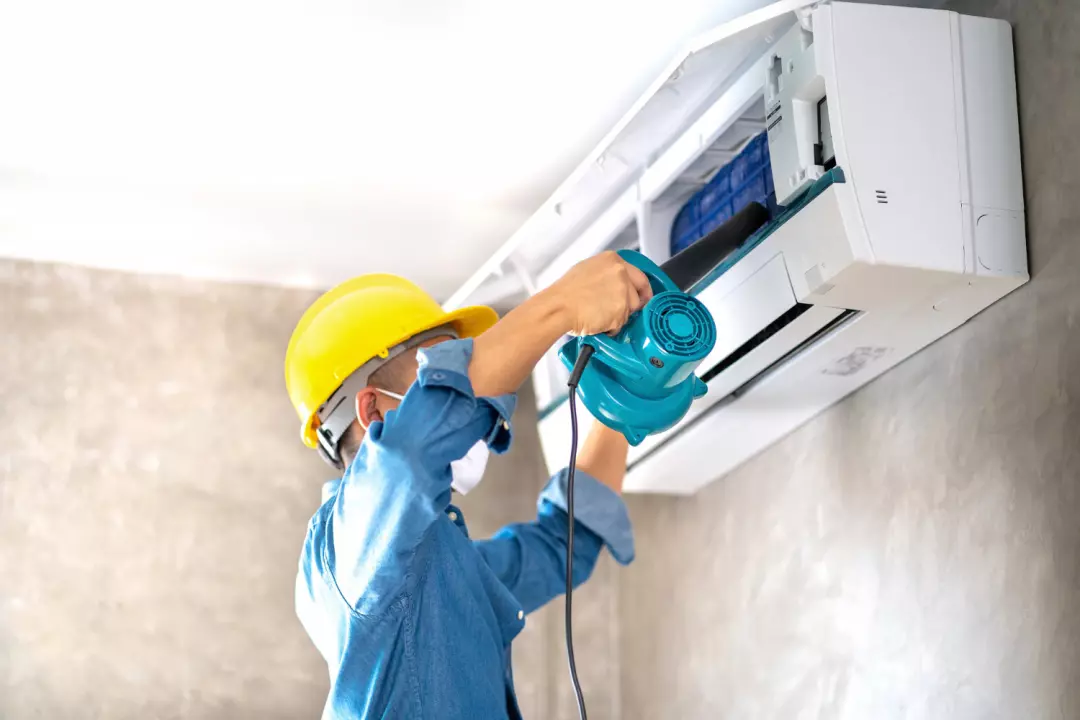
What Are Portable Air Conditioners?
Portable air conditioners are a great alternative to traditional window units. They can be used in any area of the home or office, and they’re simple to install and use. Portable air conditioners come with revolutionary designs that can cool your space quickly and efficiently while requiring minimal maintenance. So what exactly are these portable units? Essentially, a portable air conditioner is a device that operates similarly to window air conditioning units but without the need for installation. Portable air conditioners draw in warm air from the room, recycle it through a refrigerant cycle, and release the cool-conditioned air back into the room. This unit is typically equipped with a compressor, condenser and evaporator coils and a fan. The exhaust hose on the back of the unit will vent out any built-up heat and moisture from the room.
How Do Portable Air Conditioners Work?
The operation of a portable air conditioner begins with the compressor. The compressor uses a refrigerant gas to transfer heat from the air inside the system to the exterior. This process is known as the refrigeration cycle. After the compressor has cooled the air, the fan blows it out into the room. In order to cool your space even further, some portable air conditioners have a technology called ‘twin-cooling’. This means that they use two separate cooling systems to make the air even more efficient at transferring heat from the room. Most units also come with a reservoir of water, which helps reduce the temperature further. As well as this, some portable air conditioning units have additional features such as air purification and ionisers.
Need assistance finding air conditioning near you?
Get a QuoteWhy Does a Portable Air Conditioner Need to be Drained?
When the portable air conditioner is running, it removes moisture from the air and collects it in a reservoir tank. This tank needs to be emptied regularly in order to prevent the unit from becoming overheated, or worse, breaking down. It is also important to empty the tank regularly to maintain the unit's efficiency and avoid mould and mildew growth. Some portable air conditioners have sensors that alert users when the tank is full and needs to be drained. If the tank isn’t emptied, then the unit won’t be able to cool the room effectively. Additionally, some models may even stop working if the tank becomes too full.
Does a Portable AC Need Water?
The answer to this question is no, not necessarily. While there are some portable air conditioners that do require water in the form of a reservoir, there are also units that don’t require any water at all. These units are known as ‘evaporative cooling systems’, and they use an evaporative pad to help cool the air. As the name implies, these systems work via the evaporation of water. They draw in hot air, pass it over a wetted-down evaporative pad, and then push the now cooled air back into the room. This type of system is more energy-efficient than traditional cooling systems, as it doesn’t require the extra energy needed to power a compressor.
What Happens When a Portable AC is Full of Water?
When a portable air conditioner is full of water, it won’t be able to work as efficiently as it should, as the excess water will interfere with the unit’s ability to cool the air. Additionally, the water can cause the unit to overheat or even breakdown. If the unit does overheat, then it is important to turn it off immediately and allow it to cool down before attempting to restart it. It is also essential to clean the water tank and ensure that it is fully emptied before using the unit again. Lastly, it's important to check the air filter on a regular basis and replace it as necessary. In conclusion, portable air conditioners need to be drained regularly in order to ensure that they are working as efficiently as possible. While some portable air conditioners require water to operate, others don’t. It is essential to make sure that the reservoir is emptied regularly so that the unit runs smoothly and efficiently.
In this article: