Do You Need Underlay for Artificial Grass on Soil?
If you're looking into getting artificial grass installed in your garden, then one of the important decisions that you need to make is whether or not to use an underlay. An underlay is essentially a layer of foam that's installed underneath your grass to provide additional protection against uneven ground and to improve drainage.
Installing a foam underlay underneath your fake lawn is not something that everyone will need to consider (for example, those installing on concrete or patio slabs). However, if you are laying on soil then you should certainly consider including one. As well as providing a protective barrier, it also helps to keep the grass in place and provide a more even surface. It can be especially useful if the ground in your garden is bumpy or uneven. Having an underlay will help to keep the grass in place and prevent any lumps or bumps from showing through.
When it comes to choosing an underlay for artificial grass on soil, it's important to make sure that you get one made from quality material. There are a wide range of underlays available, so it's worth researching which ones are suitable for your particular needs. It's also worth checking reviews from other users, as this can help you to choose the best product for your needs.
How to Prepare Garden Artificial Grass
If you want a perfect garden artificial grass installation, then the first step is making sure that the preparation is done properly. Artificial grass requires a fairly straightforward installation process, but it's important that you take the time to prepare the ground correctly first.
The main steps include:
• Removing old grass from the garden – Depending on the size of the area you want to cover, you may need to rent a turf cutter to make the removal easier. If the soil seems very compacted or weedy, then you may also want to rotavate the area.
• Clear up – Make sure to remove all debris from the area, such as stones, leaves, twigs, and weeds.
• Edging and base layer – Use a spade to create a shallow trench around the edges to help hold the edges of the grass in place. You should also add a base layer of gravel to help with water drainage.
• Lay your sharp sand – A thin layer of sharp sand should then be laid on top of the gravel. This helps to create a cushion layer and also to keep the grass in place.
• Add a protective layer – Finally, you can then add a protective layer of weed membrane or cardboard to prevent weeds from coming up through the grass.
Once all of this is in place, then your garden is ready for you to start laying your artificial grass!

Need assistance finding artificial grass near you?
Get a QuoteHow to Fit Artificial Grass
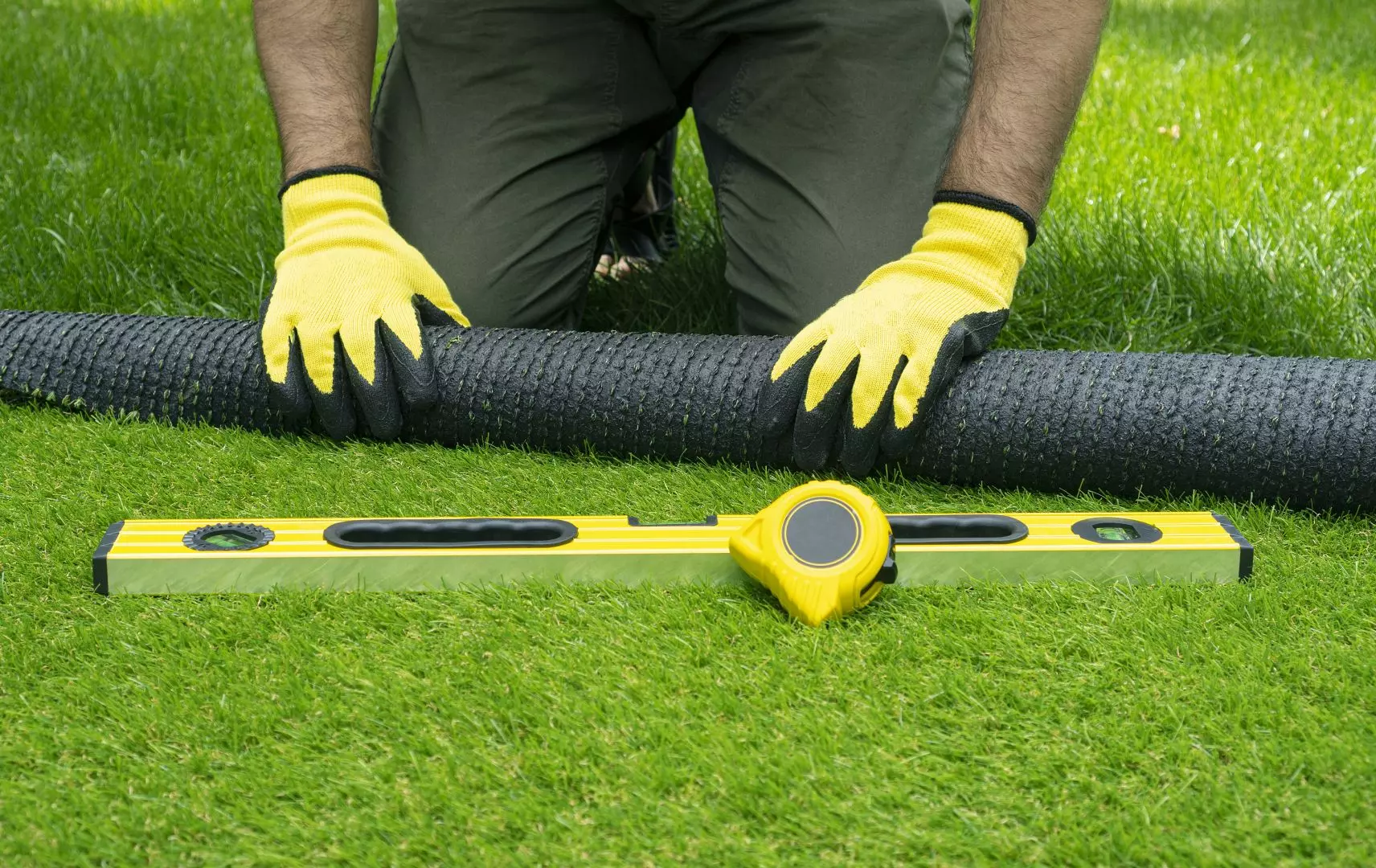
Once you've prepared your garden, the next step is fitting your artificial grass. This involves unrolling and cutting the grass into the size and shape that you require, before then securing it in place.
The process starts by making sure that the edges are perfectly straight. You'll then need to cut the grass if necessary, using a sharp knife or scissors. Once the grass has been cut, you can then secure it to the ground. This can be done by using either adhesive tape or nails.
You'll also need to fill in any gaps around the edges with a jointing compound. Once the artificial grass is secured in place, you can then brush it down with an artificial grass brush to ensure that the fibres are all standing up.
Finally, you can then spread a layer of kiln-dried sand over the top. This helps to keep the grass in place and also protects it from UV rays.
Maintenance Requirements for Artificial Grass
Although artificial grass doesn't demand as much maintenance as traditional turf, there are still some basic requirements that you'll need to keep in mind.
In order to keep it looking its best, you should regularly brush it over with a stiff brush to help maintain the pile of grass. You should also check it regularly for tears, ripples, and discolouration. If you spot any, then you should repair them quickly to prevent further damage.
Depending on how much wear and tear it receives, your artificial grass may need to be replaced every 5-10 years. To ensure that it remains in top condition, it's also important to remove any debris or dirt that accumulates over time.
Install Artificial Grass on a Budget
Artificial grass can be quite costly, especially if you're looking for a good quality product. However, if you’re looking to save money, then there are a few things that you can do to install artificial grass on a budget.
One of the cheapest options available is to use an artificial grass offcut. This is the leftovers of a previous project, usually at discounted prices. Although these pieces usually come in a variety of shapes and sizes, you should be able to get a decent-sized piece to use for your own project.
Another way to save money is to install artificial grass yourself. Although professional installation is always recommended for best results, it is possible to do the job yourself.
In this article: