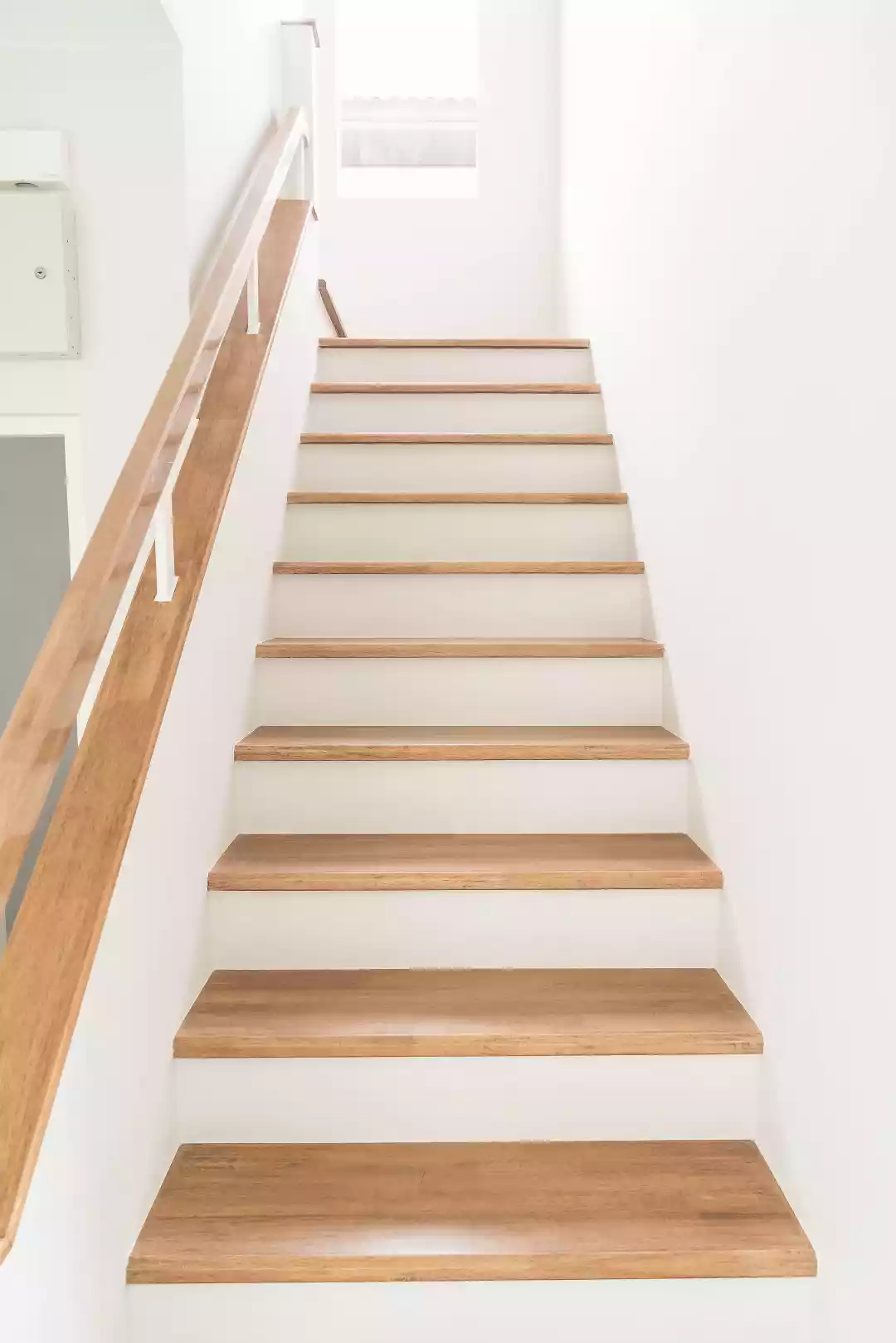
Legal Requirements For Handrails on Stairs
Stairs are one of the most common features in homes and public buildings, yet they are also a leading cause of accidents. A properly fitted handrail is not only an important safety feature, but in many cases, it is a legal requirement.
Understanding the rules around building regulations, handrail placement, and correct installation will help you ensure compliance while also providing essential protection to individuals using your staircase.
This article will act as a clear guide, breaking down what the UK building regulations say, how to measure correctly, and what you need to know whether you’re working on a domestic property, flats, or larger public buildings.
What Do the Building Regulations Say?
The building regulations set out clear rules for when handrails are required. For domestic stairs, a handrail must be provided on at least one side of every flight of stairs. If the staircase is 1m wide or more, then handrails are required on both sides.
The standard height for handrails is between 900mm and 1000mm measured vertically from the pitch line (an imaginary line drawn along the nosing of the stair treads). Adequate headroom of at least 2m should also be maintained above the stairs to avoid collision risks.
In public buildings, the rules are stricter, with continuous rails recommended on both sides of staircases to help prevent falls and improve access for all users, including small children, older adults, and those with limited mobility.
Handrail Specifications and Placement
When planning an installation, it is important to follow the correct handrail specifications. These include:
- A wall mounted handrail should be securely fixed with brackets spaced at regular intervals to provide support.
- On the side of the stairs where no wall is present, the handrail is usually attached to newel posts, balustrades, or spindles.
- The top of the handrail should be smooth and easy to grasp, offering a comfortable grip without sharp edges.
- The handrail start should ideally begin before the bottom two steps and continue past the top and bottom risers to give users a secure hold throughout the stair flight.
- Handrails should be fitted on landings where there is a change of direction, particularly in flats and residential dwellings.
Stair Parts and Materials
A handrail is only one part of a staircase system. Other stair parts such as spindles, balustrades, and newel posts all play a role in providing safety and strength.
- Spindles or an infill are used to reduce the gap between the handrail and the tread, making the staircase safer for children.
- Newel posts are structural supports found at the corner or end of a stair flight, holding the rail securely in place.
- Balustrades and guardrails are often required on the open side of stairs to provide extra protection against falling.
- Handrails can be designed from a range of materials including timber, wood, metal, and even glass, depending on the style of the property.
- Wires or infill panels may also be used in modern construction to create a stylish finish, but regulations still apply.
Measuring for Compliance
To comply with the building code, you must take the necessary measurements before installing a handrail. Key measurements include:
- Height: between 900mm and 1000mm from the pitch line to the top of the handrail.
- Width: the minimum width for domestic stairs is 800mm, while the maximum width before requiring handrails on both sides is 1m wide.
- Rise and Tread: The rise (vertical part) of a step should not exceed 220mm, and the tread (horizontal part) should be at least 220mm deep to allow a secure foot placement.
- Headroom: A minimum of 2m of headroom is required throughout the staircase.
When measuring, always allow for landings, openings, and any change direction. A diagram can be a useful guide to confirm compliance.
Need assistance finding staircase installation near you?
Get a QuoteDomestic Properties vs Public Buildings
In a domestic property, handrails required are generally on one side of the stairs unless the staircase is over 1m wide. In public buildings, however, regulations are stricter. Both sides must have continuous handrails, and additional guardrails or balustrades may be required for extra safety.
For flats and shared dwellings, the rules usually follow those of public buildings, as more people are using the stairs, increasing the risk of accidents.
Installation and Safety Considerations
When installing a handrail, you must ensure it is secure, fitted with strong brackets, and positioned correctly to prevent falls. Handrail must be comfortable to hold and positioned at a standard height that works for most individuals.
Other important considerations include:
- Comfortable grip – round or oval shapes are easier for people to grasp.
- Continuous rails – rails should ideally continue without interruption along the flight of stairs.
- Landings – rails should be provided on landings with a change direction.
- Bannisters – on domestic stairs, the bannister is often combined with spindles and a handrail for added support.
Common Questions and Guidance on Handrail Requirements
Do you need a handrail in every house?
Yes, in most dwellings a handrail is required on domestic stairs for compliance with UK building regulations.
What if the staircase is very narrow?
If the staircase is less than 1m wide, only one handrail on one side is necessary.
Where should the handrail stop?
The rail should begin at the handrail start point, continue along the flight, and stop at a newel post or wall.
What about ramps?
For any ramp longer than 2m, a handrail is required on at least one side to aid access and safety.
Legal Requirements For Handrails on Stairs: Final Thoughts
The rules around handrails may seem complex, but they are in place to keep people safe and to prevent falls. Whether you are a homeowner planning a renovation, or managing a building project in public buildings, knowing the regulations is essential.
If in doubt, always check with your local authority or seek professional advice before installing a handrail. Correct planning, accurate measurements, and following guidance will ensure your staircase meets all the necessary requirements and offers safety and protection for years to come.
In this article: