
Choosing The Right Clothing For Your Brand
Branded clothing can help your business look professional, consistent and easy to recognise. The right clothing can support your brand, protect your brand reputation and give customers a clear sense of your brand identity. Choosing the right clothing is important because the garments you select can affect comfort, quality, cost, style and the way your team is seen. For a clothing brand, fashion brand or any company creating its own brand items, this stage can make or break the final result.
What does branded clothing say about your business?
Branded clothing can say a lot before a person from your team even speaks. It can show that your business is organised, professional and proud of its values. It can also help customers trust your team, as branded clothing makes staff easier to recognise and gives your business a more polished appearance. This matters in a competitive market where a brand needs to stand apart from the crowd and leave a strong first impression.
Why Choosing The Right Clothing Matters
The clothing you choose affects how people see your brand. Poor quality clothing, an uncomfortable fit or unclear branding can give the wrong message. Well chosen clothing can help your team look smart, feel comfortable and represent your brand in the right way. This is also true for startup brands, start ups and brand owners who want to start a clothing line or launch a new brand in the fashion industry.
Think about your brand style
Your clothing should match the style of your brand. A formal business may need smart shirts, jackets or simple uniforms. A relaxed or creative fashion brand may suit hoodies, polo shirts or a t shirt. Think about the vision you want to convey, then choose clothes that support that image. Your designs, colours, logo, patterns, prints and overall aesthetics should reflect the brand's values and connect with your target audience.
Consider Where The Clothing Will Be Worn
Think about where your team will wear the clothing most often. Clothing for office use may be different from clothing for events, outdoor work, retail spaces, trade shows or wholesale meetings. The location can help you decide whether your clothing should be smart, casual, practical or weather resistant. If you sell goods at trade shows, your clothing can also assist with awareness, sales and direct contact with a potential customer.
Choose Clothing That Suits Your Team
Your team should feel comfortable and confident in the clothing you choose. Consider different body shapes, sizing, roles and the kind of work involved. Offering a range of options can make it easier to ensure everyone has clothing that suits their task. This also helps with consistency, professionalism and customer satisfaction, as your staff will be more likely to wear items that feel good throughout the day.
Pick colours that match your brand
Colour is an important part of brand identity. Choose colours that match or support your brand colours, and check how they look with your logo. If your main colour is bold, you may prefer to use it as a feature rather than across the whole item. White, black and neutral tones can work well depending on the design. The right colours can capture attention while still keeping the clothing easy to wear.
Decide where your logo should appear
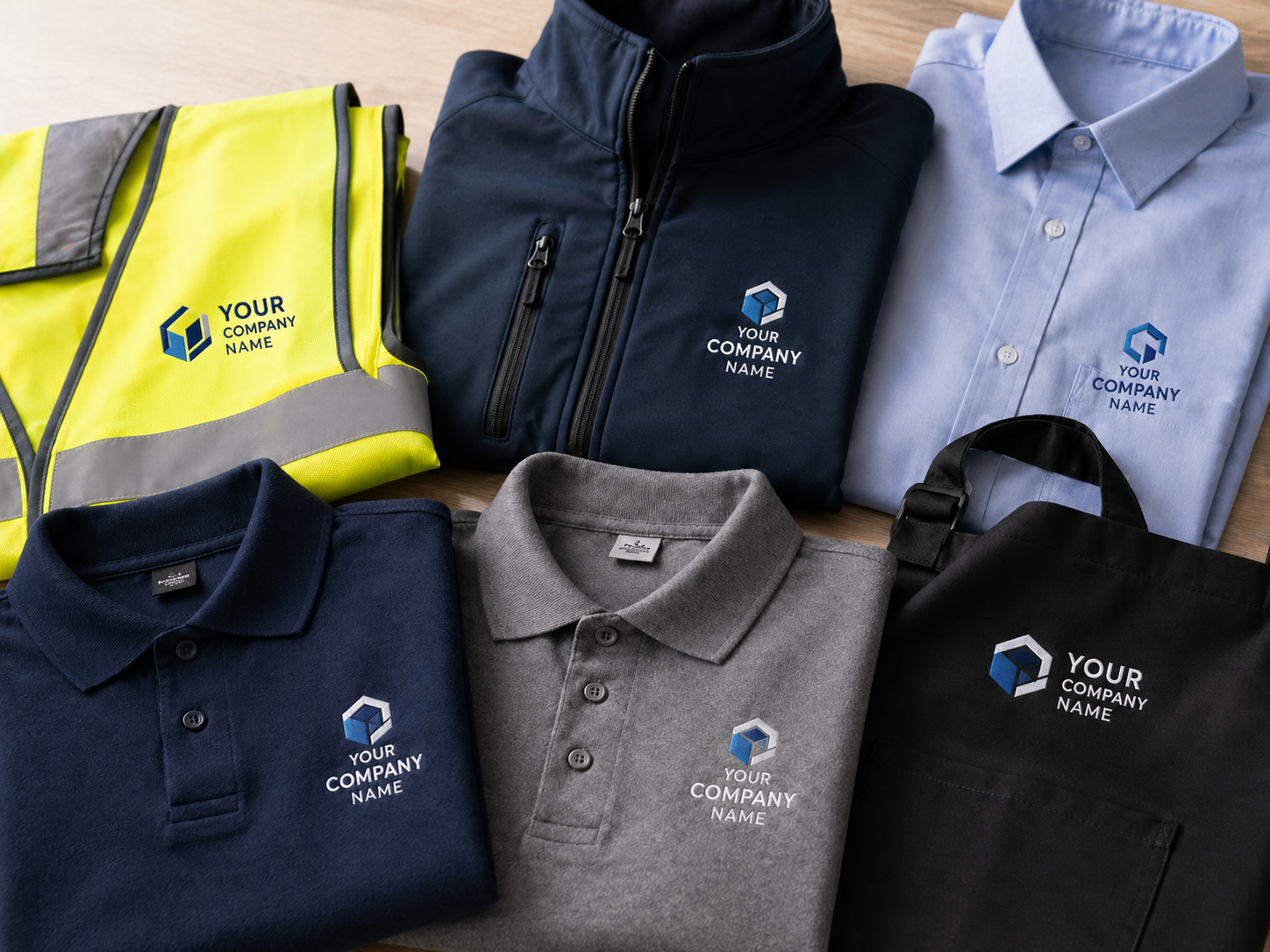
Logo placement can change the look of your clothing. A small logo on the chest can look neat and professional, while a larger logo on the back can make your brand more visible. Think about how clear the logo needs to be and whether the clothing should feel subtle or more eye-catching. This detail can make a big difference to how your brand is understood by consumers, clients and friends of the business.
Need assistance finding custom branded clothing near you?
Get a QuoteCompare Different Clothing Types
There are many clothing types to choose from, including T-shirts, polo shirts, hoodies, sweatshirts, jackets, caps, accessories, sportswear and workwear. Each product type has a different purpose. T-shirts can work well for casual events, polo shirts can look smart but relaxed, and jackets can be useful for outdoor teams. You may also decide to build a wider collection or new line once you know which product category your customers like most.
Think About Comfort And Fit
Comfort is just as important as appearance. Clothing that is too tight, too loose or made from rough fabric may not be worn often. Choose items that allow people to move easily and feel comfortable throughout the day. A good fit can also make the clothing look smarter. This is a key point when choosing garments for staff, as most people will only use clothing that feels safe, practical and suitable.
Check fabric quality and durability
Quality matters because branded clothing is often worn and washed many times. Strong fabric, neat stitching, stitch details, good construction and careful finishing can help clothing last longer. Fabric quality, fabric type and product quality should all be checked before you commit. Durable clothing may cost more at first, but investing in high quality products can reduce risk, protect your reputation and give better value over time.
Choose the right branding method
Different branding methods suit different clothing types. Embroidery can look smart and long lasting, especially on polo shirts, jackets and workwear. Printed designs can work well on T-shirts, hoodies and larger logo areas. The best method will depend on the fabric, design, product, use and budget. A good clothing manufacturer can explain the options clearly and help you avoid confusion before bulk production starts.
Work With The Right Clothing Manufacturer
Choosing the right clothing manufacturer is one of the most important steps if you want to produce garments for your own brand. The right clothing manufacturer should understand your idea, your target market and the quality level you expect. Most manufacturers have different strengths, so carry out extensive research, check reviews and ask key questions before signing a contract. The right clothing manufacturer should be transparent about lead times, pricing, samples, minimum order quantity and delivery.
Understand manufacturers, suppliers and the production process
Manufacturers and suppliers play a vital role in turning a great idea into finished garments. Some manufacturers specialize in menswear, while others focus on accessories, sportswear or traditional wardrobe items. Good suppliers can help with fabric, materials, packaging, stock, shipping and logistics. The production process can be complex, so clear communication with your clothing manufacturer, factory or suppliers helps maintain quality control and keeps the project moving in the right direction.
Prepare a clear tech pack
A tech pack is a guide that tells manufacturers how to make your designs. A strong tech pack usually includes measurements, fabric, colours, stitching, trims, logo placement, patterns, labels, packaging and any changes needed. Without a tech pack, mistakes are more likely and the production stage can become time consuming. A clear tech pack gives suppliers accurate information and helps ensure your clothing manufacturer can produce your goods as planned.
Think about pricing, minimum order and profit
Before making an order, ask about the pricing structure, minimum order, order quantity and unit cost. Pricing can change depending on fabric, quantity, customisation, packaging and shipping. A cheap price can sound appealing, but it may reduce quality or create trouble later. Work out your profit margin, budget and funds before committing. If needed, you could start small, raise money, test demand and scale once your customer base grows.
Plan for different seasons and settings
Your team may need different clothing throughout the year. Lightweight T-shirts or polo shirts may suit warmer months, while hoodies, sweatshirts and jackets may be better for colder weather. If your team works both indoors and outdoors, consider a mix of clothing options. Planning by season can help your brand stay relevant, follow fashion trends and respond to changes in the market without wasting money on items that are not needed.
Keep your budget in mind
Set a clear budget before choosing your clothing. Remember to include the cost of the clothing, branding, samples, delivery, packaging and future reorders. It may be worth paying more for better quality items, especially if they will be worn often or seen by customers regularly. A cost effective choice is not always the lowest price. It is the option that gives your brand the best balance of quality, comfort, speed and reliability.
Use Marketing To Support Your Clothing
Once your clothing is ready, think about how you will share it. Social media, social media marketing, a website, a post or short video can help show your products to followers and bring traffic to your shop. Your content should explain the benefits of the clothing and show why it fits your brand. This can help build trust, create buzz and engage an audience that may be interested in making a purchase.
Order Samples Before Making A Final Choice
Samples can help you check the fit, fabric, colour, branding quality and overall product before placing a larger order. They give you the chance to see how the clothing looks in real life and how it feels to wear. Ordering samples can help you avoid costly mistakes, get feedback and make a more confident decision. This trial step is helpful before package production, bulk production or a larger investment.
Build long term relationships
Working with a reliable clothing manufacturer, suppliers and a good production partner can support long term success. Long term relationships often lead to better understanding, faster response times and more helpful suggestions. The right one should be able to collaborate, explain problems, provide guidance and treat your project with care. In the UK and other countries, the best manufacturers are usually the ones that combine expertise, honesty and strong communication.
Choosing Branded Clothing: Conclusion
Choosing clothing for your brand takes time, research and attention to detail. Think about your audience, your values, your products, your budget and the manufacturers who will help bring your designs to life. A successful brand is not built by one item alone, but by consistency, quality, good planning and an understanding of what customers need. With the right clothing, the right clothing manufacturer and a clear approach, your brand has a better chance to grow, thrive and succeed.
In this article: