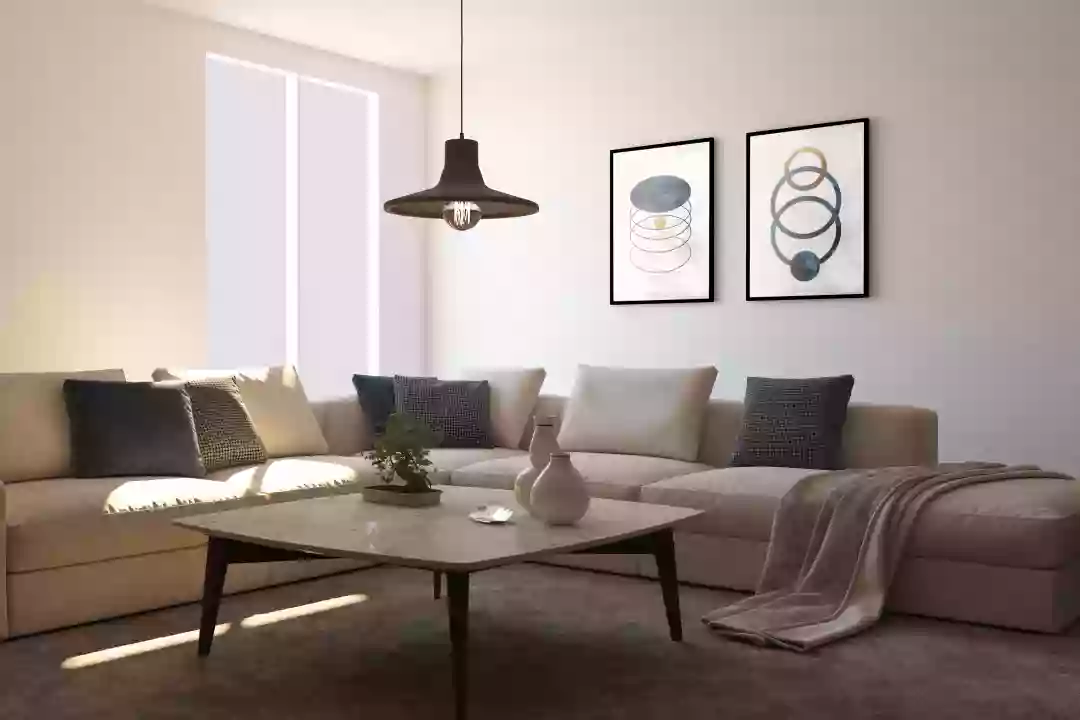
What Is Form?
Form is an element of art in interior design. Every design project begins with form, which also acts as the foundation for all interior designs; having an impact on visible items, such as patterns, colours, and textures, is advantageous. Simply put, form in interior design is the three-dimensional contour of a thing or an object enclosed inside. Instead of being the actual thing, it is a three-dimensional representation of the object in space. Interior designers build the form and can choose from a wide choice of shapes, colour palettes, materials, and textiles to produce original or delicate designs. In interior design, form comprises the length, width, height, mass, and even volume of the room.
A Purposeful Plan
Until you know what that space's main purpose will be, there is no rational method to design it. This implies that before you even consider colour schemes or trim, it is extremely crucial to prepare for people and purpose. Even while all of those little things are a lot of fun to work on and even more fun to put together, you can't add the correct accent pieces to a room without knowing what they will be used for.
Consider whether a space will be used for sizable and frequent social occasions or whether it will be regularly crammed floor to ceiling with kids. Only once you've set the floor design can you start to add minor details like photos, toys, or end tables. These two purposes call for quite distinct layout and furniture requirements. The finer elements that must be taken care of afterwards will automatically fall into place if planning is done with a purpose in mind first. A room is designed perfectly when the form is allowed to follow the function of the space.
Need assistance finding interior design near you?
Get a QuoteFunctional Spaces Have More Value
Even if you pour your heart and soul into your interior design projects, it's likely that you won't live in the same house for the rest of your life. You must have some sort of negotiating tool available when it's time to relocate in order to raise the overall market value of your house. This value-pusher is achieved by designing places that are constructed with functionality in mind. Accent pieces are simple to pack and transport, but the practical design gives you the option of including furniture that is already organised in the bargain.
Overall, purchasers are significantly more drawn to a property with a highly functional room layout and design. Few purchasers are looking for homes with lots of small, awkward rooms; instead, open areas with floor plans that flow together are great for contemporary home sales. Be sure to consider the long term while planning the layout of your property and give yourself options that will reduce stress and draw in future buyers.
Getting Your Money’s Worth
An interior design strategy that prioritises function above form is one that takes the budget into account. Those without a suitable design or floor plan frequently waste money on unnecessary expenses in the area of interior design. Picking up odd objects here and there can be a financially draining activity that ultimately results in a room with no real purpose or direction.
You will spend less on things you don't need and make wiser investments in things that will last over time if you enter the design process knowing what you hope to accomplish and for whom. Your house serves as the centre of your comfort, family, and friends, thus it demands the best interior design work possible. Make sure you've laid the necessary foundation before letting your creativity shine, and let your sense of taste and style guide you. When your home's interior is both practical and beautiful, you'll be glad you made the decision.
Design Changes Over Time
The elegance of interior design is that no change is ever made permanently. Function within any area must be the first priority because interior design schemes can be frequently updated. Function, on the other hand, is considerably more difficult to alter after it has been established. It's far simpler to have a sturdy layout base with substantial furnishings and simply need to bother about producing fresh accent pieces when you desire to modify your interior décor yet again.
The notion of needing to not only switch out detail décor but also find a means to fit it into an awkward area will definitely overwhelm you if you build a room that is mostly centred on accent pieces and design. If you prioritise function, you'll have a strong floor plan that you may modify as needed. Lessons in exterior design are also subject to this restriction.
Understanding and respecting the concept of form following function is key to creating beautiful, liveable spaces. By focusing on the purpose of a space and stocking it with practical pieces, we can create useful spaces that look amazing. This timeless concept ensures that the value of our homes will remain intact over time.
In this article: