Space
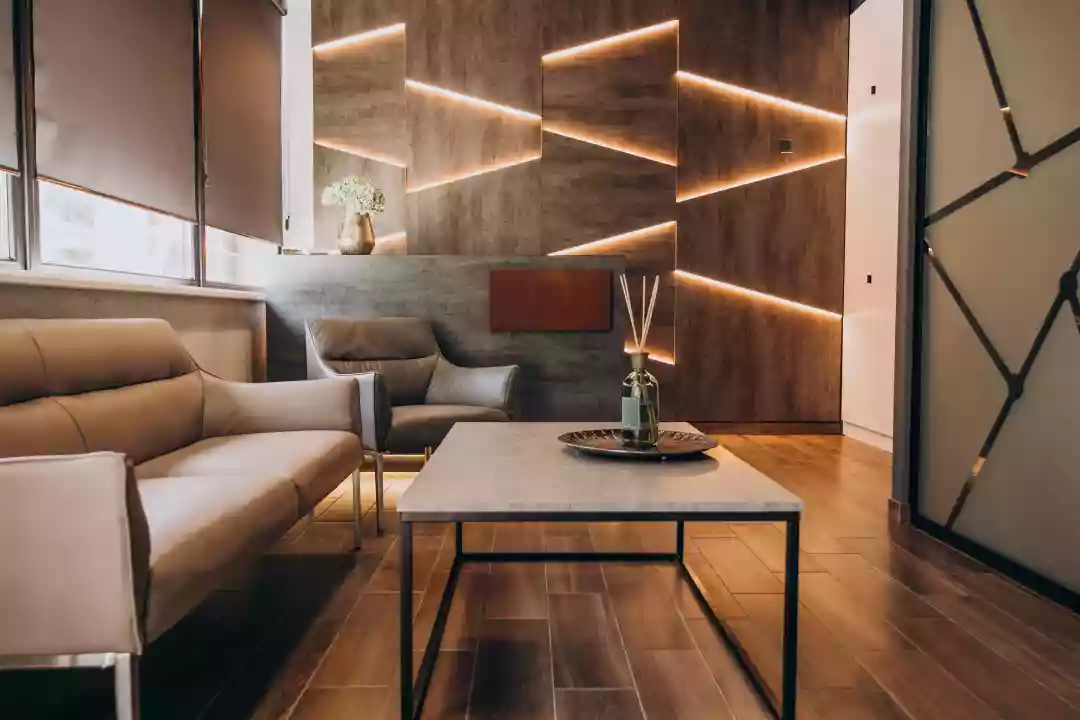
Space can be thought of as the sculptural aspect of a room or environment. It refers to both the physical space that exists in a room and the objects within it. It also takes into account the relationship between the objects and how the objects interact with each other to create a harmonious and balanced atmosphere. Good use of space creates a sense of order and cohesion, while bad use of space can lead to clutter, disorder and disorganisation.
Line
Line typically corresponds to shape and form and is crucial in determining a room's structure. Lines can define a space by drawing the eye to a specific place and can be horizontal, vertical, geometric, or curved. Different types of lines can be used and combined to provide visual appeal to space and define specific sections. Additionally, lines can be utilised to demarcate one space from another, such as when dividing a huge room into various areas using furniture or rugs.
As an illustration, horizontal lines give the impression of solidity. Let's say we have a room with wainscoting, chair rails, crown moulding, and tall baseboards. These horizontal lines give the entire area a pervasive sense of stability by conveying a sense of timelessness, stateliness, and occasionally even masculinity. The limits of both straight and curved surfaces are shown by lines. Diagonal lines' dynamic and whimsical nature adds drama and energy to spaces with round staircases or contemporary fabric designs. Curved lines, on the other hand, are more typical of windows, furniture, and arched doors.
The core of form in interior design is line. Straight, vertical, horizontal, diagonal, and curved forms are among its traits, which define the shape and volume of space. Other design components include pattern, space, texture, shape, colour, and light. Every design concept must have the appropriate ratio of all interior design components.
Need assistance finding interior design near you?
Get a QuoteForm
Form is one of the most important elements of interior design. It refers to the shapes and sizes of objects, furniture, and accessories within a room, as well as the overall shape of the room itself. This includes the use of symmetry, asymmetry, contrast, and proportion to create an aesthetically pleasing and functional environment. Achieving a sense of harmony with the use of forms is key to successful interior design.
Every design project begins with form, which also acts as the foundation for all interior designs; having power over visible components like patterns, colours, and textures is helpful. Simply said, form in interior design is often defined as the three-dimensional contour of a thing or an item confined inside. Rather than being the real thing, it is a three-dimensional picture of the object in space.
Interior designers treat the form and can pick from a wide range of shapes, colour palettes, materials, and textiles to create unique or delicate forms. Form in interior design comprises the room's length, breadth, height, mass, and even volume.
Colour
Since it is an effective tool for establishing moods and developing a distinctive ambience, colour has a significant impact on interior design. It is crucial to take into account how colours complement one another, both inside a specific area and as part of the larger design scheme. While conflicting hues can be distracting and detract from the overall aesthetic, the appropriate colour scheme can improve a place.
Colour may also be utilised to alter the perceived size or proportions of a space, giving the impression that a space is larger or smaller depending on its colour. It can visually elevate oppressively low ceilings or reduce ominously high ones. It may make a starkly bright space feel cosier or brighten a dark area. Colour can serve as the decorative scheme's focal point or just as a background. Additionally, certain hues might be employed to conjure up specific historical eras.
Texture
The physical characteristics of a material's surface, whether its fabric, wallpaper, stone, metal, or wood, are referred to as its texture. Textures provide a place of depth and richness while also adding aesthetic intrigue. To create a statement or give a room a unique character, several textures might be employed. Combining textures with different degrees of softness and texture may offer another level of intrigue and provide a distinctive home setting.
It cannot be emphasised how important it is to use texture and layering in interior design. The absence of these components will make a space appear flat and dull. A place may come to life and become tactile, with numerous points of interest, by adding textured materials.
Texture describes the many surface characteristics of walls, floors, carpets, toss pillows, scatter cushions, and furniture. Examples of different wall textures include rough concrete, exposed brick, matte paint, and linen wallpaper. Texture can be tactile or visual. Upon entering a space, various textures will catch your eye.
The process of interior design is intricate and necessitates a thorough grasp of its five primary components: space, line, form, colour, and texture. It is possible to design a room that is both visually beautiful and practical by skilfully employing these components.
In this article: