
What Should You Include in a Commercial Car Park Maintenance Plan?
A well-thought-out maintenance plan is essential for any commercial car park. Whether it's attached to a retail space, office block, or public facility, the car park is often the first thing people see when they visit. A tidy, safe and well-maintained space gives the right impression and ensures safety for users.
Good planning makes all the difference. By creating a detailed maintenance schedule that includes tasks like cleaning, checking the surface, repainting lines and managing drainage, businesses can keep their car parks in excellent condition all year round. This article will explain the key tasks that should be included in your commercial maintenance plan, why timing matters, and how to work effectively with staff or contractors. Whether you're starting from scratch or reviewing an existing plan, these tips can help you keep your car park looking its best.
Remember, your car park is not just a place to leave vehicles. It is a reflection of your brand and a space used by staff, customers, suppliers and visitors. Making sure it is clean, well-managed and safe is not just a nice extra — it is essential for maintaining reputation and reducing liability.
Routine Maintenance Tasks Every Plan Should Cover
To keep a car park in good condition, regular maintenance tasks are essential. These should be clearly listed in your plan and scheduled throughout the week, month and year. Doing these tasks regularly helps prevent damage, keeps the area looking professional, and protects the safety of everyone who uses it.
Car Park Cleaning
Car park cleaning should take place often. Litter, dust, oil, and leaves can quickly build up and make the space look neglected. More importantly, they can create safety risks. Cleaning the surface helps prevent people from slipping and stops debris from entering drains.
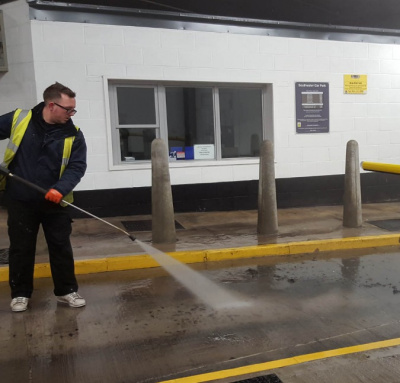
A mix of manual litter picking and mechanical sweeping is usually best. Pressure washing can also be used for deeper cleaning, especially in areas with heavy oil or stains. For high-traffic car parks, cleaning should happen daily or weekly, while smaller or quieter ones may only need it fortnightly. In larger sites, dividing the area into zones can make car park cleaning more manageable. Each zone can have its own schedule, allowing teams to rotate and clean without blocking off the entire site. This is especially useful for 24-hour businesses where access must remain open.
Drainage Maintenance
Drains can get blocked by leaves, silt or rubbish. When this happens, water builds up and can cause long-term damage to the surface. Standing water also increases the risk of slips or skids, especially during colder months. Your plan should include checks and cleaning of all gullies, channels and drain covers. Ideally, this should be done before winter or after heavy leaf fall in autumn. Keeping the drainage system clear helps avoid expensive problems later on. If your site experiences regular flooding or pooling, consider drainage improvements as part of long-term planning. Adding additional gullies or sloping the surface can help with water flow and safety.
Line Marking and Signage Checks
Markings for bays, walkways, disabled spaces and directional arrows must be clear and easy to see. Faded or worn paint can confuse users and increase the risk of accidents or incorrect parking. Make sure signs are clean, upright and visible. This includes entrance signs, exit directions, speed limits and warning signs. Repainting and replacing signs should be planned at least once a year, or more if the car park is heavily used. Adding anti-slip paint or reflective coatings to markings can improve visibility and safety during rain or in poor light conditions.
Need assistance finding car park cleaning near you?
Get a QuoteScheduling Repairs and Inspections Throughout the Year
Maintenance plans are not just about day-to-day tasks. It’s important to plan for inspections and repairs across the year. This helps catch problems early and spread costs out, so nothing comes as a surprise. At least four full inspections should be done each year. These should look at the surface condition, drainage, signs, lighting and overall cleanliness. Monthly spot checks in between help keep standards high and let you act quickly if something changes.
Repairs should be organised based on priority. High-risk problems such as deep potholes or loose surfaces should be fixed immediately. Less urgent tasks, such as faded line markings or minor cracks, can be grouped together and scheduled during quieter times. Seasonal planning is also useful. In winter, gritting and snow removal may be needed. During autumn, leaves should be cleared more often. Spring and summer are ideal for repainting, deep cleaning and resurfacing.
Using a yearly calendar or planner helps ensure tasks are done on time and nothing is forgotten. You can also use it to track costs, plan budgets and avoid unexpected bills. Some car parks benefit from using inspection apps or digital tools that allow photos to be uploaded, notes to be added, and reminders to be set for follow-up. This makes inspections easier to manage and allows for better reporting if problems arise later.
Why a Joined-Up Plan Saves Time, Money and Risk
Many businesses deal with car park problems as they arise. This might seem easier at first, but it usually leads to more costs, missed tasks and higher risks. A joined-up plan brings all your maintenance efforts together and helps everything run smoothly. When tasks are planned ahead and done regularly, the whole car park stays in better shape. This reduces the need for emergency callouts, which are often more expensive. Regular cleaning and inspections also extend the life of the surface, so it does not need to be replaced as often.
From a safety point of view, regular maintenance reduces the chance of accidents. Cracked surfaces, faded signs or slippery patches can all cause injury or damage. Fixing these issues before they cause harm is much better for everyone involved. A planned approach also makes your site more reliable for staff, visitors or customers. People are more likely to return if they know the space is safe, clean and easy to use. In contrast, a poorly maintained car park can damage your business reputation.
Finally, having everything in one plan helps with records and reporting. If something does go wrong, you’ll have proof that checks were done and repairs made. This can help in legal cases or with insurance claims. Companies with large estates or multiple locations may find it helpful to develop a standard plan across all sites. This makes training easier and ensures consistent service quality, no matter where the car park is located.
Working with Facilities Teams or External Contractors
Depending on the size of your business or property, you might have an in-house team to handle car park maintenance or you might work with outside contractors. Both can work well, as long as the roles are clear and communication is strong.
Using In-House Facilities Teams
If you have a facilities team on site, they can be a valuable resource. They are often more familiar with your location and may be able to deal with small issues quickly. These teams can take care of daily cleaning, inspections and basic repairs. To make it work well, give them clear instructions, provide regular training and use checklists or tracking systems. It’s also helpful to assign one person as the main contact for car park cleaning and maintenance. This helps avoid confusion and ensures all jobs are followed up properly.
Hiring External Contractors
For more specialist tasks, such as resurfacing or professional car park cleaning, it often makes sense to hire a contractor. These providers have access to the right tools, experience and equipment needed to do the job safely and efficiently. When choosing contractors, check they have experience with commercial sites. Agree in advance on timescales, service levels and how progress will be reported. Ask for case studies or references from similar properties. Contractors who understand your needs will save time and deliver better results in the long term.
Clear Communication and Record Keeping
Whether you work with internal teams, outside firms or a mix of both, you need clear records. Every task should be logged, checked and signed off. Photos, reports and receipts should be stored together in case they are needed later. This makes it easier to manage costs, spot patterns, and improve planning over time. It also helps protect your business in case of a complaint or incident on site. Many businesses find that keeping a shared digital folder for maintenance records makes collaboration easier between managers, staff and service providers. Make sure everyone knows where documents are kept and how to update them.
In this article: