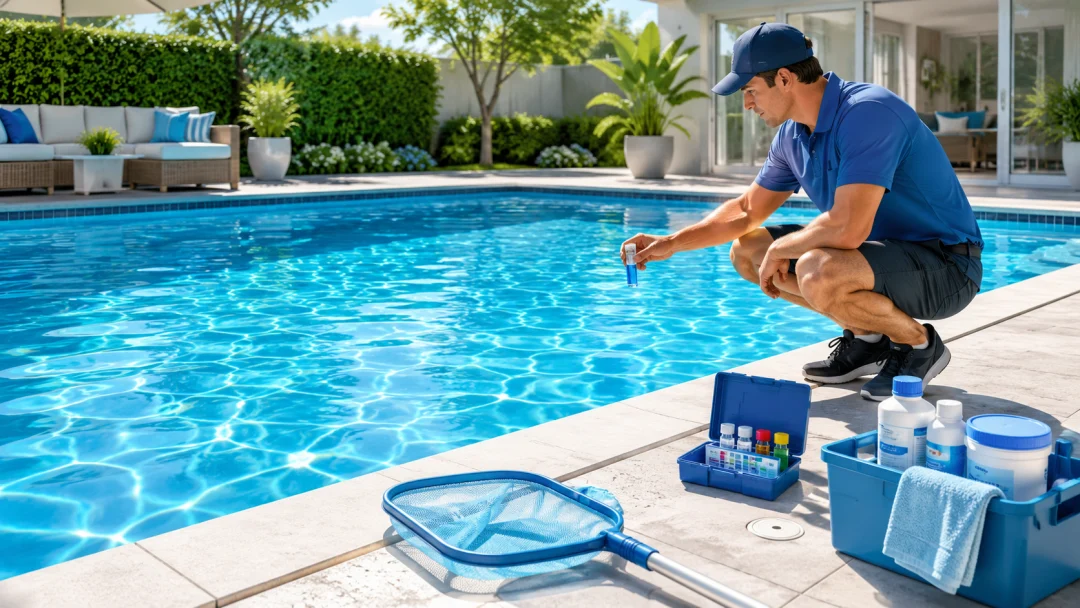
A Simple Guide to Pool Water Testing
Pool water testing is one of the most important parts of looking after a swimming pool. Regular pool water testing helps you understand what is happening in the pool water, which chemicals are needed, and whether the water is safe for swimming. Even when swimming pool water looks clear, the water chemistry can still be out of balance, so testing your pool water should be part of normal pool care.
This ultimate guide explains why pool water testing matters, how to test pool water correctly, and what the main readings mean. It will also explain how chlorine, ph, total alkalinity, calcium hardness, cyanuric acid, salt, and total dissolved solids can affect pool water quality. With simple water testing habits, pool owners can maintain a clean, clear, and safe pool while reducing the risk of costly repairs.
Why Pool Water Testing Matters
Pool water can look clean but still have chemical levels that are too high or too low. Dirt, rainwater, sunlight, body oils, sun cream, leaves, debris, heavy pool usage, and swimmers can all change the water. These factors affect pool water chemistry and can lead to algae growth, bacteria, cloudy water, eye irritation, skin irritation, and damage to pool equipment.
Testing pool water quality is essential because it helps you spot problems before they become serious. Poor water balance can damage pool surfaces, pool walls, the pool floor, metal parts, the filter, the pump, and other equipment. Unbalanced pool water can also cause corrosion, scale, cloudiness, and a lack of cleanliness. Over time, this can reduce the longevity of pool equipment and lead to expensive repairs.
Good pool water testing also supports health and safety. If chlorine levels are too low, bacteria and algae can grow. If chlorine levels are too high, excessive chlorine may irritate the eyes, skin, and, in some cases, cause respiratory issues. Keeping the proper chemical balance helps ensure the swimming pool is ready for use and protects swimmers during each swimming season.
How Often Should You Test Pool Water?
As a simple guide, test pool water frequently during warmer months, especially when the pool is open and used often. Chlorine levels and ph levels should generally be tested two to three times a week. Total alkalinity should be checked once a week, while calcium hardness levels are often tested once a month. Salt, cyanuric acid, phosphates, and total dissolved solids may be tested less often, depending on the pool type and the products used.
You should also test pool water after heavy rain, strong sunlight, high temperature, a busy swimming day, a pool party, or when the pool has been closed for a long time. It is also wise to test before swimming if the pool has not been used for a while. In winter, water testing is still important, although the frequency may be lower if the pool is covered and not in regular use.
What You Need to Test
Pool water testing usually looks at several key levels. The main things to test are chlorine, ph, total alkalinity, calcium hardness, cyanuric acid, salt, and, in some pools, total dissolved solids. Each reading is an important factor in keeping pool water safe, clean, and balanced.
You may not need to test every part of the water chemistry every day, but each part has a purpose. Chlorine helps control bacteria and algae. Ph levels show whether the pool water is acidic or alkaline. Total alkalinity acts as a buffer and helps hold ph steady. Calcium hardness helps protect pool surfaces from damage and helps prevent scale. Cyanuric acid protects chlorine from sunlight, and salt matters in saltwater pool systems.
A good testing kit, pool test strips, liquid kits, digital testers, or digital pool testers can assist with these checks. The choice depends on the level of accuracy you need, how often you test, and how confident you feel taking measurements. Each method has pros and cons, so it is useful to understand the different options before you purchase a testing kit.
Chlorine Levels
Chlorine is used as a sanitizer because it helps kill bacteria and control algae. Free chlorine is the chlorine that is ready to work in the pool water, while combined chlorine has already reacted with contaminants. If free chlorine is too low, the water may become unsafe, green, or cloudy. If high levels of chlorine occur, swimmers may notice burning eyes, irritated skin, or a strong chlorine smell.
The recommended amount of chlorine can depend on the pool type, the volume of water, and the products used. Many pool readings are shown in ppm, which means parts per million. Always follow the instructions on the chemical packaging and add the correct amount. Adding too much chlorine can be wasteful, while adding too little can allow bacteria and algae growth.
Shock treatment may be needed after heavy pool use, contamination, or algae problems. Shock adds a higher dose of chlorine to break down contaminants and restore clean swimming pool water. After shock treatment, wait until chlorine levels return to the proper levels before swimming. Retest the water before use to ensure it is safe.
Need assistance finding swimming pool maintenance near you?
Get a QuotepH Levels
Ph levels show whether pool water is acidic, neutral, or alkaline. A low ph means the pool water is more acidic, which can lead to corrosion, damage to pool equipment, and discomfort for swimmers. A high ph means the water is more alkaline, which can reduce the power of chlorine and cause cloudy water or scale.
The ideal range for ph in most pools is usually between 7.2 and 7.6. This range helps chlorine work well and keeps swimming more comfortable. If you need to adjust ph, sodium carbonate may be used to raise ph, while sodium bisulphate or muriatic acid may be used to lower it. Always follow product instructions and never mix pool chemicals together.
Ph can change because of rain, chemicals, swimmers, sunlight, and the natural movement of water. Testing ph regularly is crucial because ph affects many other parts of pool water chemistry. If ph is out of range, other readings may seem confusing, and the test results may be harder to understand.
Total Alkalinity
Total alkalinity helps keep ph levels steady. If total alkalinity is too low, ph can rise and fall quickly, making pool water hard to control. If total alkalinity is too high, ph may become difficult to adjust, and cloudy water or scale can occur.
For many pools, total alkalinity is often kept around 80 to 120 ppm, although you should always follow the guidance for your own pool and products. The term ppm means parts per million, and it is commonly used when comparing pool water testing results. Keeping total alkalinity in the right range helps maintain balance and protects the pool surface, heater, filter, and other components.
When adjusting total alkalinity, take one step at a time. Add chemicals slowly, allow the pump to run, and retest after the water has circulated. Making large adjustments too quickly can lead to imbalances and may make the process harder to control.
Calcium Hardness
Calcium hardness measures how much calcium is dissolved in the pool water. If calcium hardness is too low, the water can become aggressive and may damage pool surfaces, grout, and equipment. If calcium hardness is too high, scale can form on tiles, pipes, heaters, and other pool parts.
Calcium hardness is especially important in areas with hard water. High calcium can make pool water cloudy and can leave rough deposits. Low calcium can lead to corrosion and surface damage. Calcium chloride is often used to increase calcium hardness when levels are too low, but the correct treatment depends on the test results and the type of pool.
Calcium hardness levels should be monitored as part of proper maintenance. The best results come from taking an accurate water sample, using a reliable testing kit, and following instructions carefully. If you are unsure about calcium hardness or scale, contact a pool care professional for advice.
Different Ways to Test Pool Water
There are several methods for pool water testing, and each one can provide useful information. The main methods are pool test strips, liquid kits, and digital water testers. Some pool owners use more than one testing kit so they can check important results in different ways.
Pool test strips are quick and easy to use. You dip a strip into the pool water, remove it, wait for the colour to change, and compare the colour with the chart on the container. Testing strips are useful for regular checks, but they must be stored correctly, kept dry, and used before they expire. For accurate results, follow the instructions and do not leave the strip sitting in the water too long.
Liquid testing kits can provide more accurate results than basic testing strips. They usually involve taking a water sample, adding a liquid reagent, and comparing the colour change. Liquid kits take more time, but they can be a good choice for pool owners who want a more careful reading.
Digital testers and digital pool testers give readings on a screen. Digital testers can be helpful when colour matching is difficult or when you want precise results. Digital water testers may need batteries, cleaning, calibration, and care of the electrodes to maintain accuracy. If the device is not looked after, the measurements may become less reliable.
How to Take a Good Water Sample
A good test starts with a good water sample. Collect the sample from around elbow depth, away from return jets, skimmers, floating dispensers, and the pool surface. A sample from the surface may not give a true reading because sunlight, air, and floating chemicals can affect it.
Use a clean container, rinse it with pool water first, and take a small sample from the main body of the pool. Test the water as soon as possible after collection. If the sample is left to sit for hours, the results may change and accuracy may suffer.
For best results, test pool water at the same place and around the same time of day when possible. Testing in the evening can sometimes give a more stable chlorine reading because strong sunlight has less effect. This simple habit makes comparing results easier over time.
What to Do After Testing
After water testing, compare the test results with the recommended range for your pool. If something is outside the proper levels, make careful adjustments. Add chemicals one at a time and give the pool water enough time to circulate before testing again.
Do not guess how much product to add. Use the pool volume, the current reading, and the product instructions to work out the correct amount. Using the recommended amount helps prevent waste, protects equipment, and reduces the risk of over-treating the pool.
Never mix various pool chemicals together. Store chemicals in a dry, secure place, away from children, pets, heat, and direct sunlight. Some specific chemicals can react dangerously if mixed, so always read the label and take safety seriously.
Common Testing Mistakes
Pool water testing is a simple process, but mistakes can lead to poor results. Common issues include using expired kits, dipping testing strips for too long, testing water from the surface only, testing too soon after chemicals have been added, failing to run the pump, and ignoring ph while only checking chlorine.
Another mistake is making too many changes at once. If you add several chemicals before retesting, it can be hard to know which action caused the change. Take one step at a time, allow the water to mix, and then retest. This makes adjusting the pool easier and helps avoid unbalanced water.
It is also important to keep the testing kit clean and closed when not in use. Heat, sunlight, moisture, and age can affect strips, liquid reagents, and digital testers. If results seem wrong or do not match the condition of the water, use another test method or ask for professional water testing.
Testing After Rain, Heavy Use, or Contamination
Rain can dilute pool chemicals, change ph, and affect total alkalinity. Heavy swimming use can lower chlorine levels quickly because swimmers introduce body oils, sun cream, sweat, and other contaminants. This can increase the need for chlorine and may lead to cloudy water if the pool is not checked.
After rain, storms, or a busy swimming day, test pool water again. You may need to adjust chlorine, ph, or alkalinity to bring the pool water back into balance. If leaves, dirt, or debris enter the pool, remove them with a net or vacuum before they break down and affect water chemistry.
If contamination is suspected, such as faecal matter, vomit, or a dead animal in the pool, close the pool and follow local safety guidance. Do not allow swimming until the correct treatment has been completed and water testing shows safe levels.
In this article: