How to Use Chlorine Safely in a Swimming Pool
Chlorine is one of the most common pool chemicals used to keep pool water clean, clear, and safer for swimmers. It acts as a disinfectant, which means it helps disinfect water, kill bacteria, kill germs, and reduce viruses, parasites, and other contaminants that can build in swimming pools. When chlorine is used correctly, it helps maintain good water quality and water clarity, making the pool more pleasant to swim in.
Chlorine is useful, but it is still a strong chemical product. If a pool owner uses too much chlorine, too little chlorine, or the wrong combination of chemicals, the result can be cloudy water, skin irritation, eye irritation, corrosion, or even dangerous fumes. Good chlorine safety means reading the product instructions, testing pool water on a regular basis, and adding chlorine only when it is needed.
The right routine helps keep a home pool clean, safe, and ready to use. It also helps protect the pool filter, pump, liner, fittings, and other items around the pool. Pool owners should remember that the correct amount of chlorine depends on the pool's volume, water temperature, how many swimmers use the pool, and how much sunlight the pool is exposed to during the day.
What Chlorine Does in Pool Water
Chlorine helps clean pool water by attacking bacteria, germs, viruses, algae, and waste from bathers. This waste can come from sweat, cosmetics, sun cream, dirt, leaves, mouth contact with water, and other substances that enter the pool. When chlorine is present at the right levels, it helps prevent algae growth and keeps the pool clean.
Chlorine also reacts with waste in the water. This can form chemical compounds called chloramines. Chloramines are often linked with a strong chlorine smell, although that odor usually means the pool water needs attention rather than meaning there is too much free chlorine. Chloramines can be irritating to the eyes, nose, and skin, so regular testing and good pool care are important.
Free chlorine is the part of chlorine that is still ready to disinfect water. Combined chlorine is chlorine that has already reacted with waste. A good test can measure chlorine levels and help you find whether the pool has enough chlorine, too much chlorine, or not enough chlorine to do the job correctly.
Why Safe Chlorine Use Matters
Safe chlorine use matters because chlorine is strong enough to kill bacteria, but it can also cause irritation or potential damage when handled badly. Chlorinated water that has very high chlorine levels may lead to red eyes, dry skin, faded clothes, and discomfort for swimmers. In some cases, poor handling of chemicals can create health problems and a greater risk of breathing issues.
Pool chemicals should be treated carefully because different chemicals can react with each other. Chlorine should never be mixed directly with acid, muriatic acid, pH reducer, algaecide, bleach, turpentine, or other pool chemicals. Mixing the wrong products can release chlorine gas, and chlorine gas can be dangerous in the air. This is why storage, handling, and adding chlorine in the correct order are essential.
Good safety habits also protect the person doing the treating. Wear protective gear such as gloves and safety glasses when handling chlorine, especially when opening a container, using granules, or pouring liquid chlorine from a jug. Work in a well ventilated area, avoid breathing dust or fumes, and wash hands after contact with any chemical products.
Common Types of Chlorine Used in Swimming Pools
There are several types of chlorine used in swimming pools. The most common forms include chlorine tablets, chlorine granules, liquid chlorine, and chlorine generated by salt electrolysis. These types of chlorine can all help disinfect a pool, but each product works in a different way and has its own dosage instructions.
Chlorine tablets are convenient because they are slow dissolving. They are often used in a floating dispenser, feeder, or sometimes a skimmer, if the product label allows it. Tablets can help maintain chlorine levels over time, but they should not usually be placed directly on the pool floor because they may damage the surface.
Liquid chlorine is another common option. Many liquid products contain sodium hypochlorite, which is similar to bleach but made for pool use at a suitable strength. Liquid chlorine can give the pool water a quick boost, and it is often used when levels are low. When you add liquid chlorine, pour it slowly into the pool, usually near the return flow while the pump is running, and keep it away from skin and eyes.
Granular chlorine is also widely used. Some products are made with calcium hypochlorite, while other types may include stabilised chlorine granules. Calcium hypochlorite is strong and must be handled with care because it can be corrosive and may react badly with other chemicals. Granular chlorine may need to dissolve in a bucket of fresh water before adding it to the pool, depending on the instructions.
Some swimming pools use salt systems. These systems use salt in the water and generate chlorine through electrolysis. This still means the pool is using chlorine, even though the process is different. Salt systems still need regular testing for chlorine levels, pH levels, alkalinity, and other key parts of water balance.
Need assistance finding swimming pool maintenance near you?
Get a QuoteUnderstanding Chlorine Levels
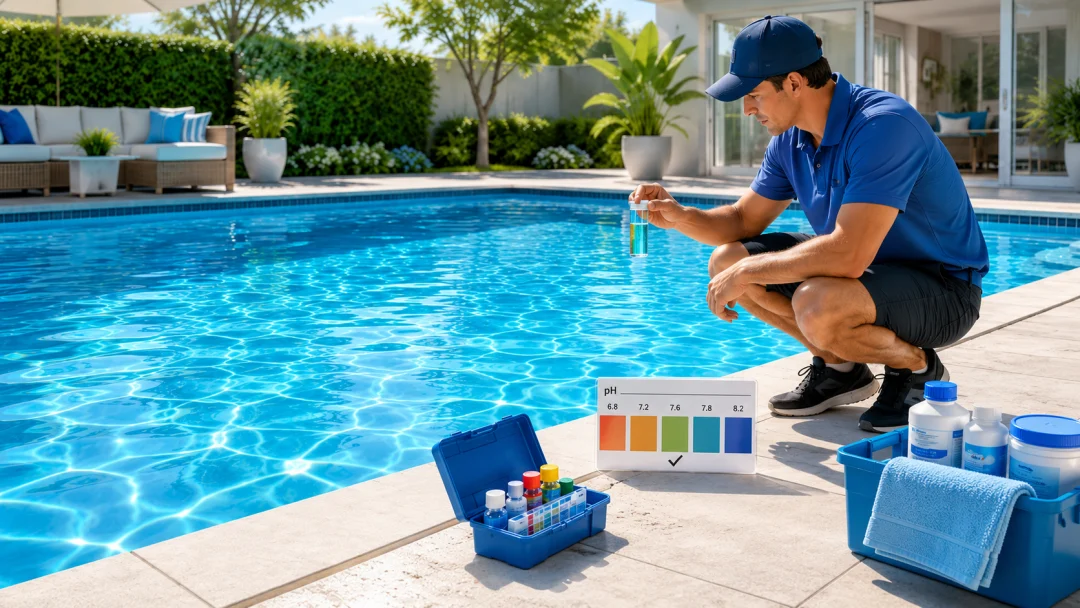
Testing is the only reliable way to know the chlorine concentration in pool water. Clear water does not always mean safe water. Pool water can look clean while chlorine levels are too low, and it can also look fine when chlorine levels are too high. Test strips, liquid test kits, and digital testers can all help measure chlorine, pH, and alkalinity.
Many swimming pools are kept within a free chlorine ideal range of around 1 to 3 ppm, although some settings and local guidance may differ. The term ppm means parts per million. A reading of 3 ppm is commonly used as an upper target for many pools, but always read the product label and local advice because the required level can depend on the pool, the product, and the number of swimmers.
When chlorine levels are low, bacteria and algae can spread more easily. When chlorine levels are high, swimmers may notice irritation, burning eyes, dry skin, or a sharp smell. If the test results show excess chlorine, do not swim until the level has dropped back into the recommended range.
People often ask how much chlorine they need. The answer is based on the pool's volume, current test results, water temperature, use level, and the strength of the product. The initial dose for a new fill or a fresh water top up may be different from a weekly maintenance dose or a shock dose. Follow the instructions and use a pool calculator or label chart to determine the correct amount.
How pH, Alkalinity, and Chlorine Work Together
Chlorine works best when the pH is in the correct range. The pH measures how acidic or alkaline the water is. If pH levels are too high, chlorine becomes less effective. If pH levels are too low, the water can feel harsh and may cause corrosion or damage to pool parts.
For many swimming pools, a pH range of around 7.2 to 7.6 is often seen as the ideal range. Balance pH before making large changes to chlorine, because poor pH can affect how well chlorine works. If you only add more chlorine without checking pH, you may waste product and still have a problem with cloudy water or algae.
Alkalinity helps keep pH steady. If alkalinity is too low, pH can rise and fall quickly. If alkalinity is too high, it can be hard to adjust pH. Good pool care means testing alkalinity, pH levels, and chlorine levels together. This balance helps maintain cleaner pool water and improves the effectiveness of chlorine.
Calcium hardness is also important, especially when using calcium hypochlorite or when the local water supply is naturally hard. Too much calcium can lead to cloudy water, scale, and small particles in the pool. Too little calcium can sometimes affect surfaces. Read the product label and test the water to keep calcium within the recommended range.
Adding Chlorine Safely
Before adding chlorine, test the pool water and read the product instructions carefully. Do not guess the dosage. Add only the amount required, based on the size of the pool and the test results. Adding chlorine without testing can lead to an overdose, low water quality, or a pool that is not safe to swim in.
When adding chlorine tablets, use a suitable feeder, skimmer, or floating dispenser only when the product allows it. Do not mix tablets with other types of chlorine or other chemicals. Chlorine tablets from different brands or different chemical forms may not be safe to combine.
When adding liquid chlorine, pour slowly and avoid splashing. Liquid chlorine can damage clothes, irritate skin, and harm eyes. It is usually best to add liquid chlorine in the evening or when sunlight is not strong, because sunlight can break down chlorine more quickly.
When using granular chlorine, check whether the product should be dissolved first. If the label says to add granular chlorine to water, use a clean bucket and add the chemical to water, not water to the chemical. Stir only as directed and make sure it can dissolve before you pour the solution into the pool. Do not use the same bucket for different chemicals.
After adding chlorine, run the pump so the water can circulate. This helps spread chlorine through the pool water and prevents high strength product from sitting in one area. Do not let swimmers enter until chlorine levels and pH levels have been tested and are safe.
Where and When to Add Chlorine
Many chlorine products are added near the deep end or close to the return flow so the pool pump can move the treated water around the pool. Never pour chlorine directly onto a person, pool steps, metal parts, or fittings. Avoid adding chlorine in strong wind because splashes or dust may blow back towards your face.
The best time for many chlorine treatments is often the evening. This gives chlorine time to work before the pool is exposed to strong sunlight. It also gives pool water time to mix before the next swim. However, always follow the product instructions because some products are designed for a different use.
After heavy rain, lots of swimmers, warm water, or a contamination event, the pool may need extra testing. Warm water can use up chlorine more quickly, and heavy pool use can increase waste in the water. Regularly test the water during hot weather and adjust the chlorine, pH, and alkalinity as needed.
Shock Treatment and Pool Shock
Shock treatment means adding a stronger dose of chlorine or pool shock to raise chlorine levels quickly. A shock dose can help break down chloramines, remove contaminants, and restore water clarity after heavy use, algae, vomiting, a faecal accident, or very cloudy water. Shock treatment may also be used when the pool has been left unused for a time.
A shock dose is not the same as a normal maintenance dose. It is stronger and needs more care. Always keep swimmers out of the pool during shock treatment and wait until the chlorine levels return to the recommended range before anyone enters. Test the water rather than relying on smell or appearance.
Pool shock may come in liquid, granular, or other forms. Some shock products contain calcium hypochlorite, while other products use different chemical compounds. Read the label, check the required amount, and do not mix pool shock with other chemicals. A shock dose can be useful, but it must be used correctly.
Never Mix Pool Chemicals
Pool chemicals should never be mixed together in a bucket, scoop, jug, container, or feeder. Mixing chlorine with muriatic acid, pH reducer, algaecide, or other chemicals can create heat, fire, fumes, or reactions that may release chlorine gas. These fumes can be very harmful if breathed in.
Only add one product to the pool at a time. Let the pump run and allow the water to circulate before adding another product. Use separate, clean, dry tools for each product. Do not put wet tools into dry chemicals, and do not put unused product back into the original container.
Keep different chemicals apart in storage. Chlorine, acid, algaecide, and other pool chemicals should be stored in their own sealed containers. Avoid stacking chemical products where a leak could drip onto another container. This simple step can prevent a serious safety problem.
Storing Chlorine Safely
Chlorine should be stored in a cool, dry, and well ventilated area. Keep it away from direct sunlight, heat, damp ground, flames, and fire. Moisture can affect chlorine tablets and granules, and heat can increase the risk of a dangerous reaction.
Always keep chlorine in its original container with the label attached. This helps ensure that the instructions, safety advice, and product content can still be read. Make sure the lid is closed after every use. Keep chlorine out of access from children, pets, and anyone who does not understand safe handling.
Do not store chlorine next to petrol, turpentine, paint, garden products, or household cleaning products. Do not store liquid chlorine above other items where it could leak. If there are signs of damage, swelling, heat, or a strong smell from a container, leave the area and seek advice from the product supplier or local safety guidance.
In this article: