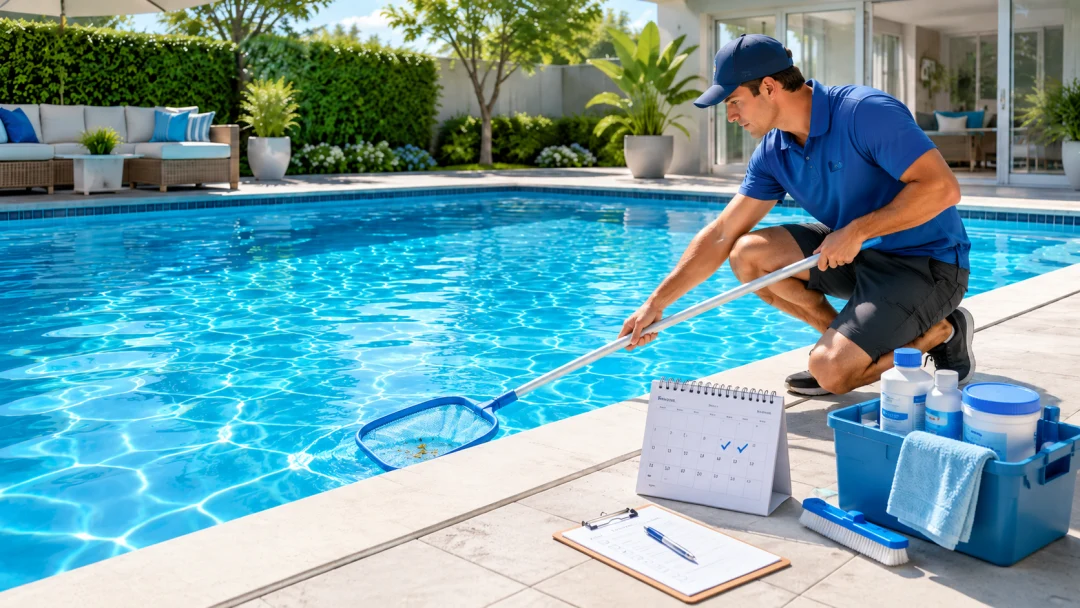
How to Keep Pool Water Clean and Clear
Keeping pool water clean and clear takes regular care, but it does not have to be difficult. A clean pool is safer, more inviting, and easier to use throughout the swimming season. The key is maintaining the water, the pool surface, and the pool equipment before small problems become bigger ones.
This comprehensive guide will help any pool owner understand the simple steps needed for keeping a swimming pool fresh, safe, and ready for swimming. With good cleaning habits, balanced chemicals, and a working filtration system, you can enjoy a refreshing oasis at home and keep your pool in great condition for longer.
Why Clean Pool Water Matters
Pool water can quickly become cloudy water or unsafe if it is not cared for properly. Leaves, dirt, dust, pollen, grass, wind, body oils, sun cream, insects, bacteria, algae, and other debris can all affect the water. Rainfall can also change chemical levels and reduce the overall health of the swimming pool water.
Clear water helps you see the bottom of the swimming pool. This is crucial for health and safety, especially when children or family members are swimming. Keeping the pool clean also helps protect the pool floor, walls, filter, pump, and other equipment from damage.
A sparkling clean pool does not happen by chance. It comes from regular maintenance, good water chemistry, and a steady cleaning routine. When the pool is clean, it looks better, feels better, and is more pleasant to use.
Test the Water Regularly
Testing the water is one of the most important parts of pool care. A test helps you check whether the water is balanced and safe. You should test chlorine levels, ph levels, alkalinity, calcium hardness, and stabiliser if it is used in your pool.
For most pools, ph levels should usually stay between 7.2 and 7.6. If the ph is too high or too low, chlorine may not work well. Poor ph can also make the water uncomfortable for the eyes and skin.
Use reliable testing kits and test the pool water regularly, ideally a few times each week during heavy usage. You should regularly check the chemical levels after rainfall, after hot weather, and after many people have been swimming. Properly balanced water helps chlorine, chemicals, and the filtration system work effectively.
Keep the Chlorine Level Correct
Chlorine helps kill bacteria and control algae. If the chlorine level is too low, bacteria can grow, algae can spread, and the pool water may turn green or cloudy. If chlorine is too high, it may irritate the eyes and skin.
Check chlorine levels often, especially in hot weather or after heavy swimming pool usage. Sunlight, rain, water evaporation, and many swimmers can lower chlorine levels more quickly. Keeping chlorine at the right level is essential for clean water and safe swimming.
Understand Pool Chemicals
Pool chemicals do more than keep the water clear. They help prevent bacteria, algae growth, cloudy water, stains, and damage to the swimming pool. The main chemicals used in many pools include chlorine, ph increaser, ph reducer, alkalinity increaser, shock treatment, and products that help control algae.
Adding chemicals should be done with care. Always add chemicals to water as directed, follow the product instructions, and allow the pump to run so the chemicals spread through the pool. This process helps create clean water and prevents strong areas of chemicals from sitting in one part of the pool.
Do not add more chemicals than needed. More is not always better. Too many chemicals can lead to poor water chemistry, skin irritation, cloudy water, or damage to pool equipment. If you are unsure, ask for advice from a pool professional or email your pool product supplier for guidance.
Run the Pool Pump Each Day
The pump moves pool water through the filter. This helps remove dirt, debris, bacteria, and small particles. It also helps chemicals move around the pool evenly. Good water circulation is one of the most important parts of keeping pool water clean.
A pump should run long enough each day to move and filter the water properly. The right number of hours depends on the pool size, the pump, the filter, and how often the pool is used. During the swimming season, many pools need the pump running for several hours each day.
If the water looks cloudy, running the pump for longer may help. Proper water flow allows the filtration system to work well and helps prevent algae, bacteria, and dirt from settling on the pool floor or walls.
Keep the Pool Filter Clean
The pool filter catches dirt, leaves, insects, and other debris. If the filter becomes blocked or dirty, it cannot clean the water well. A dirty filter can also put strain on the pump and reduce water circulation.
There are different types of pool filter, including sand filter systems, cartridge filters, and glass media filters. A sand filter often needs a backwash when the pressure rises. Cartridge filters usually need to be removed, rinsed with a hose, and cleaned according to the instructions.
Clean the filter regularly to prevent clogs and keep the pool clean. Depending on usage, the filter may need cleaning every few weeks. For best results, inspect the filter, baskets, and skimmer often, and make sure the filtration system is serviced when needed.
Backwash and Rinse When Needed
If your swimming pool uses a sand filter, backwash the filter when the pressure gauge shows that it is needed. Backwash means reversing the water flow to wash trapped dirt out of the sand. After backwash, use the rinse setting if your filter has one.
Need assistance finding swimming pool maintenance near you?
Get a QuoteSkim Leaves and Debris
Skimming should be part of your daily pool cleaning routine. Leaves, insects, grass, dust, pollen, and debris should be removed from the surface of the water as often as possible. If they sink, they can stain the pool floor and make cleaning harder.
Use a net to skim the surface of the swimming pool. Skimming is especially useful after wind, rainfall, or when shrubs and trees are near the pool area. Emptying the skimmer basket also helps prevent clogs and keeps suction strong.
Regular skimming helps keep your pool clean and can reduce the amount of chemicals needed. It is a small job, but it makes a big change to the cleanliness and clarity of the water.
Brush the Pool Walls, Steps, and Floor
Brushing the pool helps stop algae, dirt, oils, and contaminants from building up on the walls, steps, corners, and floor. These areas can become dirty even when the pool water looks clear.
Use a pool brush at least once a week. Brush shaded spots, steps, ladders, corners, and the waterline where oils and grime can build up. A good brush helps remove algae before it becomes a bigger problem.
Brushing also helps chemicals work better because it moves dirt into the water, where the filter can catch it. This is one reason brushing is an essential part of maintaining a clean pool.
Vacuum the Pool Floor
Vacuuming removes dirt, sand, leaves, and debris from the pool floor. Some pools use automatic cleaners, while others need manual vacuuming. Either way, vacuuming helps keep the swimming pool clean and clear.
Vacuuming once a week is often enough for light usage. A pool may need more cleaning after storms, parties, windy weather, or heavy swimming. If debris is allowed to sink and stay there, it can lead to stains, algae, and cloudy water.
Move the vacuum slowly so dirt does not rise back into the water. This gives the filter time to work and helps create better results.
Shock the Pool When Needed
Shock treatment means adding a stronger dose of chlorine or other shock chemicals to clean the water quickly. Shock can help kill bacteria, eliminate algae, and remove cloudy water caused by heavy use or low chlorine.
You may need to shock the pool after heavy swimming, after very hot weather, after heavy rain, if algae appears, or if chlorine levels stay low. Shock is also useful when the water smells unpleasant or looks dull.
Always follow the product instructions and wait until the water is safe before swimming again. Many pool owners shock at night because sunlight can reduce how well chlorine works. This can help the shock treatment work more effectively.
Prevent Algae Growth
Algae can make pool water green, slippery, and unsafe. It grows faster in warm water, poor water circulation, low chlorine, and dirty areas of the pool. Algae can also start in shaded corners, on steps, or along the walls.
To prevent algae, keep chlorine at the right level, brush the pool regularly, run the pump daily, clean the filter, remove leaves and debris, and maintain good water chemistry. These simple practices help keep your pool clean and reduce the chance of algae growth.
If algae appears, treat it quickly before it spreads. Brush the affected area, test the water, adjust chemical levels, clean the filter, and use the right chemicals to kill the algae. Acting early can save time and money.
Keep the Water Level Right
The water level should usually sit around the middle of the skimmer opening. If the water is too low, the pump may draw in air. If the water is too high, the skimmer may not remove surface debris properly.
Rain, splashing, backwash, and water evaporation can all change the water level. Check the water regularly and adjust it when needed. Keeping the right water level helps the pump, skimmer, and filtration system work as intended.
Use Pool Covers When the Pool Is Not in Use
Pool covers help keep leaves, insects, dirt, dust, and other debris out of the water. A cover can also reduce water evaporation and help the water stay warmer. Using pool covers is one of the easiest ways of keeping a swimming pool clean when it is not being used.
A cover is especially useful overnight, during windy weather, during winter, or when the pool will not be used for a few days. Make sure the cover is clean before putting it back on, as a dirty cover can add dirt to the pool.
Pool covers should be stored properly when not in use. If they are left on grass or dirty ground, debris can stick to them and enter the pool later.
Check Pool Equipment Often
Pool equipment needs regular checks to work properly. Look for leaks, strange noises, weak water flow, damaged hoses, loose fittings, or a pump that does not sound normal. If you hear a strange noise, inspect the equipment before the problem gets worse.
Check the pump, filter, skimmer, return jets, pool cleaner, hose, pipes, baskets, and connections. This helps ensure the pool clean routine works well and helps prevent expensive repairs.
Pool equipment should be serviced when needed. A pump or filter that is not working properly can lead to poor filtration, cloudy water, bacteria growth, and a dirty swimming pool.
Keep the Area Around the Pool Clean
The area around the swimming pool can affect the water. Grass, leaves, soil, pollen, shrubs, and dust can be carried into the pool by feet, wind, or rain. Keeping the area clean helps reduce how much dirt enters the pool.
Ask swimmers to rinse before entering the water. This helps remove body oils, sweat, sun cream, and other contaminants. It is a simple step that can improve pool cleanliness and reduce pressure on chlorine and other chemicals.
Try to keep toys, towels, and garden items away from the pool edge when they are not in use. This helps prevent dirt and debris from being thrown or blown into the water.
Maintain a Regular Cleaning Routine
The easiest way to keep pool water clean and clear is to follow a simple routine. Regular maintenance means you do not have to deal with a dirty pool all at once. Small cleaning tasks done often are easier than fixing a large problem later.
A good weekly routine may include testing the water, checking chlorine levels, checking ph levels, brushing the walls, vacuuming the floor, skimming leaves, emptying baskets, cleaning the filter, and checking the pump and water level.
Depending on the size of the pool and the number of swimmers, you may need to clean more often. If the pool has heavy usage, clean and test more regularly. Keeping your pool clean is easier when you follow a clear routine.
Common Causes of Cloudy Pool Water
Cloudy water can happen for several reasons. The most common causes include poor water balance, low chlorine, a dirty filter, poor water circulation, algae growth, too much debris, or chemicals that have not been added correctly.
To resolve cloudy water, start by testing the water. Then adjust ph, alkalinity, and chlorine as needed. Clean the filter, brush the pool, vacuum the floor, and run the pump for longer if required.
Cloudy water can also happen when the filter is too small for the pool size or when the pump is not running for enough hours. If the problem keeps coming back, the filter, pump, or chemicals may need further checking.
Know When to Clean More Often
Some situations mean your pool needs extra cleaning. After a storm, after a party, after heavy swimming, or after a very hot day, the pool water may need more attention. More swimmers means more oils, sweat, and bacteria in the water.
You may also need extra skimming, brushing, and vacuuming when trees are nearby or when leaves fall into the pool. During warmer months, algae and bacteria can grow faster, so keeping the water clean becomes even more important.
A good rule is to monitor the water every day during heavy use. If you notice dull water, slippery walls, low chlorine, or a dirty floor, act quickly.
In this article: