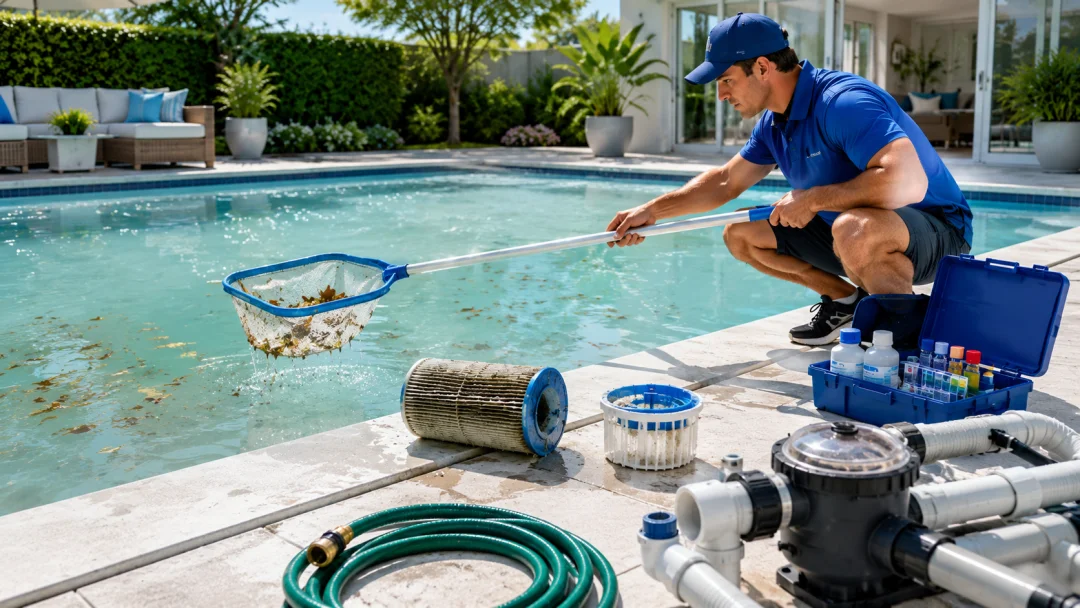
How Often Should You Clean Your Swimming Pool?
Cleaning your swimming pool often helps keep the water clear, safe, and pleasant to use. A pool can collect leaves, dirt, bugs, body oils, sun cream, and other debris very quickly. If this debris is not removed, the water can become cloudy, algae can grow, and the pool can become harder to manage. Keeping your swimming pool clean is a vital part of good pool maintenance, as it helps protect swimmers, equipment, and the life of the pool.
The right cleaning frequency depends on several factors, including how often people swim, the weather, the size of the pool, the amount of debris nearby, and whether it is a private pool, commercial pool, or one of many public pools. A swimming pool that has heavy use will require more cleaning than a private pool that is only used a couple of times each week. With the right equipment, a simple plan, and regular maintenance, it is easier to keep your swimming pool ready for swimming.
Why Regular Pool Cleaning Matters
Regular cleaning helps stop dirt, leaves, algae, and other debris from building up in the pool water. It also helps pool chemicals work properly because there is less waste for the chemicals to deal with. This is one reason why proper maintenance is so important for keeping the water clean and safe.
A clean swimming pool is safer and more enjoyable. Clear water lets you see the pool floor, which is important for swimmers and helps prevent health issues. A clean pool can also reduce the chance of slippery walls, green water, cloudy water, blocked equipment, and harmful bacteria. Without regular cleaning, a pool can become a breeding ground for bacteria, algae, and contaminants.
Good pool maintenance also helps protect the pool surface, tiles, walls, ladders, pump, filter, and filtration system. If debris becomes stuck or the water chemistry is poor for too long, it can lead to staining, scaling, structural damage, or expensive repair work. Regular pool care can save money over time because small issues are easier to fix than major damage.
h3>How Often Should You Skim the Pool?You should skim the pool surface as often as possible. Ideally, this should be done every day during warm weather, after windy weather, or when trees are close to the swimming pool. Skimming removes leaves, insects, bugs, and floating debris before they sink to the bottom.
A pool net is one of the most useful tools for this task. Using a net each day helps keep the pool clean and makes later cleaning easier. It also helps stop leaves and dirt from reaching the skimmer basket, the pump basket, and the pool filter. A clogged skimmer or clogged basket can reduce water flow and put stress on the pump.
How Often Should You Brush the Pool?
The pool walls, steps, corners, and floor should usually be brushed at least once a week. Brushing helps remove dirt and stops algae from taking hold on the pool surface. If you brush walls, steps, and corners often, you can help prevent algae from spreading in areas with low water movement.
Pay close attention to shaded areas, steps, ladders, tiles, and corners. These areas often collect dirt and algae more quickly because water does not always move through them well. Brushing is also important before vacuum cleaning, as it helps loosen dirt so the vacuum can remove it from the pool floor.
A swimming pool clean routine should always include brushing. Chemicals alone cannot remove all dirt from the walls and surface. The brush, vacuum, skimmer, pump, filter, and chemicals all work together to keep the swimming pool clean and safe.
How Often Should You Vacuum the Pool?
Most pools should be vacuumed once a week. A pool vacuum helps remove dirt, grit, leaves, and debris from the bottom of the pool. Vacuum cleaning is especially important if debris has settled on the floor after rain, wind, or heavy use.
You may need to vacuum more often after storms, heavy rain, windy weather, building work nearby, or a pool party. If the pool looks dirty, do not wait for your normal cleaning day. A quick vacuum can help keep the water clear and prevent algae or bacteria from gaining a chance to grow.
Some pool owners opt for automatic vacuum equipment, while others use a manual vacuum. Both can work well if used properly. The best choice depends on the pool size, the amount of debris, the time you have, and how much maintenance you want to do yourself.
How Often Should You Test the Water?
Pool water should be tested regularly to ensure it is balanced. Chlorine levels and ph levels should usually be tested two to three times a week during the swimming season. In hot weather, after rain, or after heavy use, you may need to test the water more often.
Test strips are a simple way to check chlorine, ph, and other parts of the water chemistry. The pool's ph should stay in the correct range so that chlorine can work well and swimmers feel comfortable. If the ph is too high or too low, it can affect the water, skin, eyes, equipment, and pool surface.
Water chemistry also includes calcium hardness, alkalinity, stabiliser, sanitizers, and minerals. These do not always need daily testing, but they should be checked as part of regular swimming pool maintenance. Keeping a proper chemical balance helps prevent cloudy water, scaling, algae growth, corrosion, and health problems.
Need assistance finding swimming pool maintenance near you?
Get a QuoteHow Often Should You Add Pool Chemicals?
Pool chemicals should be added when testing shows that the water needs them. Do not add chemicals without first checking the water. Too much chlorine, low ph, high ph, or poor water chemistry can create trouble for swimmers and equipment.
Chlorine helps kill bacteria and helps keep the water clean, but it is not the only chemical that matters. A swimming pool may also need chemicals to adjust ph levels, calcium hardness, alkalinity, and sanitizers. If you are unsure, a pool store can test the water and provide information about which chemicals are needed.
Always follow the label instructions when adding chemicals. Keep chemicals away from children, store them safely, and never mix different chemicals together. Good chemical care is essential for keeping a pool clean and safe.
How Often Should You Clean the Pool Filter?
The pool filter should be cleaned when it becomes dirty or when the pressure rises above the normal level for your system. The exact timing depends on the type of filter, the size of the swimming pool, how often people swim, and how much debris enters the water.
Sand and glass media filters may need a backwash when the pressure is high or the water flow becomes weak. Cartridge filters should be removed and cleaned as advised by the maker. If the filter stays dirty for too long, water may not move through the filtration system properly, and the pool can become cloudy.
The filter is a vital part of pool maintenance because it removes small particles from the water. A clean filter helps the pump work well, keeps water moving, and supports clear, healthy pool water. You should also inspect the filter, pump, and other equipment regularly to find problems before they lead to damage.
How Often Should You Empty the Skimmer Basket?
The skimmer basket should be checked often, especially when leaves, insects, or other debris are falling into the swimming pool. In busy periods, this may need to be done daily. A full basket can block water flow and make the pump work harder.
Keeping the skimmer basket clear helps the filtration system work properly. It also helps prevent debris from reaching the pump basket and filter. If you notice weak water movement, a noisy pump, or poor skimming, check the skimmer first.
The skimmer is a small part of the pool system, but it has an important job. It removes floating debris from the surface and helps keep the pool clean. Emptying the skimmer basket is one of the easiest maintenance steps for pool owners.
How Often Should You Check the Pump Basket?
The pump basket should be checked regularly as part of your pool care routine. It catches debris that gets past the skimmer basket. If the basket becomes clogged, it can reduce water flow and place stress on the pump.
Before opening the pump basket, turn off the pump and follow the equipment instructions. A clean basket helps protect the pump and keeps water running through the pool system. It is also a good time to inspect the lid seal, check for cracks, and make sure no dirt is stuck inside.
If the pump is not running well, the pool water may not move through the filter properly. This can lead to cloudy water, algae, and poor water quality. Keeping the pump basket clean is a simple way to support the whole pool maintenance routine.
How Often Should You Shock the Pool?
Pool shock treatment is not always needed every week, but it can be useful when the water needs a deeper clean. You may need to shock the pool after heavy use, hot weather, heavy rain, or if algae starts to appear.
Shock treatment raises chlorine levels for a short time to help remove waste, bacteria, and contaminants. Always follow the product instructions and test the water before swimming again. The chlorine levels must return to a safe range before anyone can swim.
If green water appears, shock treatment may be needed along with brushing, vacuum cleaning, and filter cleaning. Algae can be hard to remove once it spreads, so quick action is important. Keeping the pool clean and safe is much easier when problems are treated early.
Daily Pool Cleaning Tasks
Daily care can be simple. Check the water level, skim the surface, look for visible debris, and make sure the pump is running properly. These steps help keep the swimming pool clean between deeper cleaning tasks.
During hot weather or heavy use, you may also need to test chlorine and ph more often. If many swimmers use the pool in one day, body oils, sun cream, sweat, and dirt can affect the water. A quick check each day can prevent bigger problems later.
Daily cleaning does not have to feel overwhelming. A few minutes with a pool net, a visual check of the water, and a look at the equipment can help ensure the pool stays safe and ready to swim in.
Weekly Pool Cleaning Tasks
A weekly pool routine should usually include skimming, brushing the walls and floor, vacuuming the pool, testing the water, checking filter pressure, and emptying baskets. This weekly care helps keep the swimming pool clear, safe, and easier to manage.
Every week, it is also a good idea to check the pump, filter, skimmer, water level, and pool chemicals. Weekly pool maintenance helps you monitor changes before they become serious. It also helps maintain a clean and safe swimming environment.
Monthly Pool Cleaning Tasks
Each month, it is useful to check calcium hardness, alkalinity, stabiliser, and other water balance levels that do not need testing every few days. These parts of the water chemistry can affect comfort, equipment, and the pool surface.
You should also inspect pool equipment, check for leaks, look at hoses and fittings, clean around the pool area, and check for signs of damage. Replacing worn parts early can prevent a more expensive repair later.
Monthly maintenance can also include cleaning around the pool, checking access points, and making sure safety equipment is in good condition. These steps help protect the pool and the people who use it.
Cleaning After Heavy Rain
Heavy rain can add dirt, debris, and extra water to the swimming pool. It can also change the water balance and lower chlorine levels. After heavy rain, skim the pool, check the water level, test the water, and clean the filter if needed.
If the water level is too high, you may need to drain some water from the pool. Always drain water safely and follow the guidance for your pool system. Too much water can affect the skimmer, pump, and filtration system.
Rain can also wash minerals, soil, leaves, and other debris into the swimming pool. If dirt has settled on the floor, brush and vacuum the pool. Additionally, test the water chemistry so you can adjust the chemicals before algae or cloudy water develops.
Cleaning After Heavy Pool Use
A busy swimming day can add sweat, body oils, sun cream, hair products, and other waste to the water. This can lower chlorine levels and make the water cloudy. After heavy use, test the water and clean away any visible debris.
If needed, run the pump for longer, check the filter, and adjust the chemicals. A pool that has had many swimmers may need extra cleaning, especially if children have been playing in the water or people have been in and out of the pool all day.
For a private pool, the cleaning frequency may depend on family use. For a commercial pool, cleaning and testing usually need to be more frequent because more swimmers use the water. Commercial maintenance must focus strongly on health, safety, and clear water.
Signs Your Pool Needs Cleaning More Often
Your pool may need more frequent cleaning if the water looks cloudy, the floor feels slippery, algae appears, the filter pressure rises, or the chlorine level keeps dropping. These signs mean the pool needs attention before the problem becomes harder to solve.
You may also need to clean more often if the swimming pool is near trees, used by many people, exposed to wind and rain, or affected by dust from the local environment. A pool that collects leaves and dirt every day will require more care than a pool in a sheltered area.
In this article: