How Does Pool Filtration Work and Why Does It Matter?
Pool filtration is essential for keeping a swimming pool clean, clear, and safe. The filter removes dirt, leaves, insects, bugs, fine particles, and other contaminants from the water. Without a good filtration system, pool water can become cloudy, algae can grow, and the pool may need more cleaning, more chlorine, and more money spent on repair or treatment.
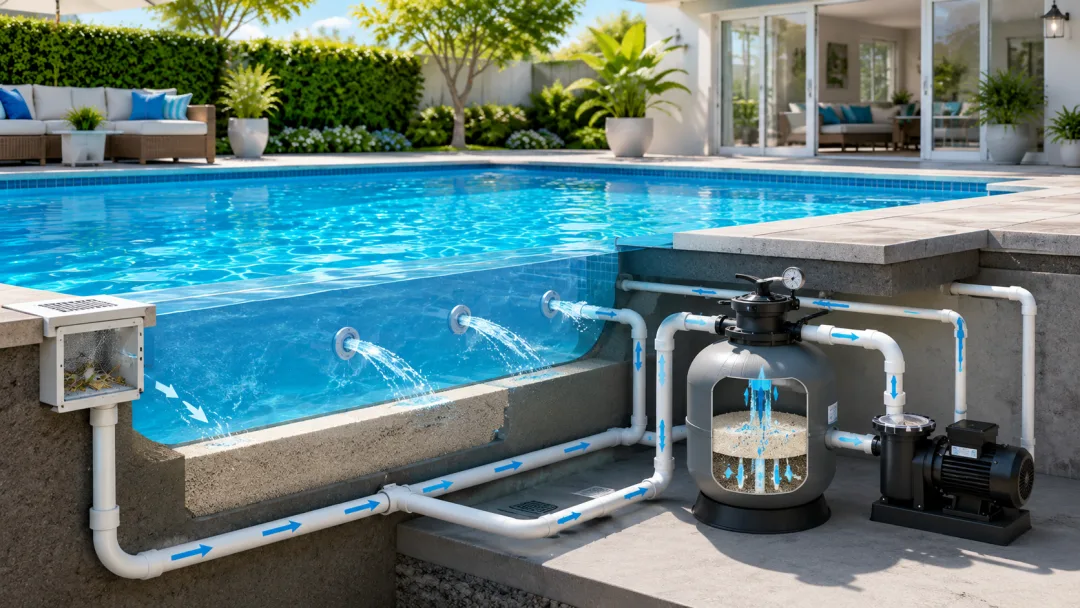
A pool filtration system works with the pool pump, skimmers, main drain, return jets, pipes, valves, and filter tank. The pump pulls water from the pool, the water passes through the filter, and clean water returns to the swimming pool through the jets. This process keeps water moving, helps chlorine spread evenly, and supports good circulation around the whole pool.
Pool filtration does not replace good sanitation, balanced water, or regular maintenance. Instead, it helps these things work better. Chemicals such as chlorine help control bacteria and algae, while the pool filter removes the physical matter that enters the water. When the system works well, the pool is easier to maintain and the water is safer and more pleasant to enjoy.
What Pool Filtration Means
Pool filtration is the process of moving pool water through a filter to capture debris, dirt, and particulate matter. The pool pump is often called the heart of the pool system because it keeps water moving through the plumbing, filter, heater, chlorinator, and return jets.
When the pump is running, water enters the skimmers and main drain. It is then pushed through the pool filter, where filter media helps trap debris and particles. Cleaner water then returns to the pool. This cycle happens again and again while the pump is on, helping the pool stay clear.
The main principle is straightforward. Moving water can be cleaned more effectively than still water. If water does not circulate well, dirt can settle on the floor, algae can form on the wall, and cloudy areas can start to appear. This is why filtration, cleaning, and circulation all work together.
Why Pool Filtration Matters
Good filtration helps improve water clarity, water quality, and swimmer comfort. It removes particles that can make the pool look dirty or cloudy. It also helps chlorine work better by reducing the amount of dirt and organic matter in the water.
If the filtration system is weak, blocked, or not running long enough, the pool may develop problems quickly. Pool owners may notice cloudy water, algae, poor chlorine results, weak flow from the jets, or debris returning to the pool. In some cases, bad filtration can also put extra strain on the pump and other equipment.
Effective filtration is also important for health. A clean water system helps reduce bacteria and contaminants, although chlorine and correct water balance are still needed. Keeping the filter clean, checking the pressure, and running the pump for the right amount of time each day can make pool care much easier.
How the Pool Pump Helps the System Work
The pool pump moves water through the pool system. It pulls water from the skimmers and the main drain, then pushes it into the filter tank. From there, the water passes through the filter media before it returns to the pool.
Inside the pump, the impeller creates the force needed to move water. If the impeller is damaged, blocked, or affected by debris, the flow rate can drop. This means the filter system may not clean the water properly. A blockage in the pump basket, pipes, or valve can also reduce filtration performance.
A timer can help pool owners run the pump for the recommended number of hours each day. The right running time depends on pool volume, pump size, filter size, weather, usage, and the amount of debris entering the pool. During hot weather or heavy swimming pool use, the pump may need to run for longer.
How the Filter Cleans the Water
As water passes through the pool filter, dirt and particles become trapped in the filter media. The filter does not remove every micro particle, but it plays a very important job in keeping pool water clear. Good filtration also helps reduce the chance of algae and cloudy water.
The filtration quality depends on the filter type, filter size, flow rate, cleaning routine, and condition of the filter media. A filter that is too small for the swimming pool may struggle to keep up. A filter that is dirty or blocked can also reduce performance and place pressure on the pump.
Better filtration comes from matching the right filter to the pool, keeping the system clean, and making sure the water can circulate around all areas. The return jets should be positioned to help move water across the pool surface and through the lower areas of the pool.
What Backwashing Means
Backwashing is the cleaning process used with sand filters and some glass media filters. During backwashing, water is pushed backwards through the filter tank. This lifts and cleans the sand or glass bed, then sends dirty water out through a waste line instead of back into the pool.
Backwashing is needed when filter pressure rises, when the return flow becomes weak, or when the water looks cloudy because the filter is full of trapped dirt. A pressure gauge can help identify when backwashing is needed. Many pool owners backwash when the pressure rises above the normal clean starting pressure.
Backwashing helps maintain filtration performance, but it also causes water loss. After backwashing, the pool water level may need to be topped up. Water loss can also come from evaporation, splash out, a leak, or a drain problem, so it is important to check the cause if the pool level keeps dropping.
Need assistance finding swimming pool maintenance near you?
Get a QuoteMain Types of Pool Filters
Pool filters are commonly grouped into three categories: sand filters, cartridge filters, and de filters. Each filter type works in a different way, and each has its own care needs, cost, lifespan, and performance range.
Most residential pools use sand filters or cartridge filters because they are reliable, simple to understand, and suitable for regular home use. De filters use diatomaceous earth and can capture finer particles, but they can be more expensive and more messy to maintain. The best option depends on the pool, the space available, the budget, and the level of clarity wanted.
When choosing between filter types, homeowners should think about pool size, water use, debris levels, cleaning time, and maintenance needs. The right filter system should be easy to maintain, efficient to run, and designed for the pool volume.
Sand Filters
Sand filters are a popular choice for many swimming pool owners. A sand filter uses a large tank filled with special sand. Water enters the filter tank, is pushed through the sand bed, and then clean water returns to the pool.
The sand inside sand filters acts as the filter media. As water passes through, the sand helps filter particles, dirt, and debris. Larger matter is trapped first, while smaller particles may be caught deeper in the bed. This simple process is why sand filters are still one of the most common systems used in residential pools.
Sand filters are known for being easy to use and straightforward to care for. They are often installed on in-ground and above-ground pool systems. Sand filters can handle leaves, dirt, and regular debris well, but they may not capture very fine particles as well as cartridge filters or de filters.
To keep sand filters working properly, regular backwashing is needed. Backwashing reverses the flow of water through the filter tank and sends dirty water to waste through a hose or drain line. This cleaning process removes trapped debris from the sand and helps restore the flow rate.
Sand filters also need the sand replaced from time to time. Over years of use, the sand can become rounded, hard, or less effective at trapping particles. When this happens, filtration performance can drop, and the pool water may become cloudy even when the pump and chlorine levels seem fine.
Choosing the right sand filter is important. The filter must be the correct size for the pool volume and pump flow rate. If the sand filter is too small, it may not hold enough dirt or provide effective filtration. If it is too large for the pump, the system may not perform as designed.
How Filtration Helps Chlorine Work
Chlorine works best when pool water is moving and being filtered. The pump helps spread chlorine through the pool, while the filter removes dirt and debris that would otherwise use up some of the chlorine. This makes the water easier to keep balanced and safe.
A good filter system helps avoid these issues by keeping water moving and removing unwanted matter.
Cartridge Filters
Cartridge filters use a pleated cartridge made from a fine material. The cartridge sits inside the filter chamber and captures debris as water moves through it. This type of pool filter can offer good filtration and is often energy efficient because it does not always need backwashing.
Cartridge filters are useful for pool owners who want simple cleaning without regular water loss from backwashing. To clean the cartridge, it is usually removed and rinsed with a hose. Over time, the cartridge can wear out and will need to be replaced.
A cartridge filter can be a good choice for many residential pools, especially where saving water is important. However, the cartridge must be cleaned carefully. If it becomes blocked with dirt, algae, or oils, the pressure can rise and the filter system may struggle to maintain clear water.
DE Filters and Diatomaceous Earth
DE filters use diatomaceous earth, often called DE powder, to create a very fine layer of filter material. This powder coats grids inside the filter and helps capture very small particles. Because of this, de filters can provide high filtration quality and very clear water.
Diatomaceous earth can trap finer particles than many sand filters, which is why some pool owners choose this type when they want excellent clarity. However, de filters need more careful maintenance. The DE powder must be added correctly, and cleaning can be more involved than with sand filters or cartridge filters.
For some people, de filters are the best option. For others, they may be too expensive or too messy. The choice depends on the pool, the expected performance, the time available for maintenance, and the confidence of the person looking after the system.
Glass Media Filters
Some sand filters can use glass media instead of sand. Glass media is made from treated glass and can help capture debris and fine particles. It may last longer than sand and can improve water clarity in some pool systems.
Glass media works in a similar way to sand because water is pushed through a bed of media inside the tank. Dirt and particles become trapped, then clean water returns to the pool. Like sand filters, glass media filters need backwashing when pressure rises or flow becomes weak.
Glass media can cost more at the start, but it may save money over the long term if it lasts longer and needs less frequent replacement. It is one more option to consider when comparing sand, cartridge, and other filter types.
Why Water Circulation Is Important
Filtration works best when water can circulate through the whole swimming pool. Good circulation helps the filter collect dirt from the surface, the floor, and the corners. Poor circulation can leave still areas where algae, dirt, and contaminants can build up.
The skimmers collect floating leaves, insects, and surface debris before it sinks. The main drain helps pull water from lower areas. Return jets push clean water back into the pool and help keep the water moving. Together, these parts help the filtration system perform properly.
If the return jets are not aimed well, some areas may not get enough moving water. This can make pool cleaning harder and may allow cloudy patches or algae to start. Adjusting the jets, brushing the walls and floor, and keeping the pump running for enough time can improve circulation.
How Long the Pump Should Run
The pump needs to run long enough to move and filter the pool water properly. The right number of hours depends on the size of the pool, pump power, filter size, weather, bather load, and debris levels. There is no single answer that suits every pool.
A common aim is to circulate the full pool volume through the filter system within a suitable time period. During warm weather, heavy use, or after a storm, the pump may need to run for a longer period. If the water becomes cloudy, running the pump for extra time can help the filter clear it.
Using a timer makes this easier. A timer can help maintain a regular running schedule, reduce wasted energy, and keep the pool ready to use. An energy efficient pump can also reduce running cost, especially if the system needs to run for several hours each day.
Signs Your Filter Needs Cleaning
A pool filter needs cleaning when it becomes full of trapped dirt and debris. If it is not cleaned, water may not move through the filter properly. This can reduce pressure at the jets, make the pump work harder, and leave the pool looking cloudy.
Common signs include weak return flow, a high pressure reading, dirt coming back into the pool, algae returning quickly, or the pump sounding strained. Another sign is when the water does not clear even after chlorine has been added and the pool has been brushed.
It is also important to check baskets. Full skimmers or a full pump basket can make the whole system feel blocked. Leaves, bugs, and larger debris should be removed often so the pump and filter can do their job.
In this article: