Why Pool pH Balance Matters
Pool pH balance is one of the most important parts of keeping pool water clean, safe, and comfortable. Even if the water looks clear, the pool's pH may still be too high or too low. When this happens, the pool can become harder to manage, and swimmers may feel discomfort, irritated eyes, or skin irritation.
Understanding pH helps you look after your swimming pool with more confidence. It also helps chlorine work properly, protects pool surfaces, supports pool equipment, and keeps the water pleasant for swimming. In this blog post, the importance of pH is explained in simple terms so pool owners can understand why pool water quality depends on the right ph balance.
What Is Pool pH?
pH measures how acidic or alkaline the water is. The pH scale runs from 0 to 14. A pH of 7 is the neutral point. Anything below 7 is acidic, and anything above 7 is alkaline. Lemon juice and vinegar are acidic substances, while soap, detergents, and some alkaline substances sit higher on the scale.
For most swimming pools, the ideal pH level is generally between 7.2 and 7.6. This ideal pH range helps pool water feel comfortable and allows chlorine to work well. When the pool's pH level is within the recommended range, the pool is easier to keep clean, clear, and healthy.
The human body is sensitive to changes in acidity. This is why swimming pool pH levels matter so much. If the pool's ph is far from the ideal range, the water can irritate the eyes, nose, skin, hair, and mucous membranes. Keeping pH levels steady helps make swimming safer and more enjoyable.
Why Does pH Matter?
Why does pH matter? pH affects almost every part of pool care. It can change chlorine effectiveness, water quality, swimmer comfort, pool chemistry, and the life of pool equipment. It can also influence how other chemicals react in the water.
When pH levels are not balanced, you may notice cloudy water, eye irritation, itchy skin, skin rashes, scale, staining, corrosion, or poor chlorine performance. These common problems can lead to more cleaning, more chemicals, and more time spent on maintenance.
A proper pH balance helps keep your pool in an ideal state. It supports safe swimming, protects pool surfaces, and helps keep your pool clean through the course of the year. For many pool owners, maintaining the right pH balance is one of the best ways to avoid common problems before they arise.
How pH Affects Chlorine
Chlorine is used to help kill bacteria and control algae. However, chlorine works best when pH levels are in the correct range. If the pool's pH is too high, chlorine becomes less effective. This means the pool water may not be cleaned as well, even when chlorine is present.
If pH levels rise too much, chlorine can lose some of its power. This may allow bacteria and algae growth to increase, causing cloudy water or green water. A pool that looks dull or cloudy may not always need more chlorine in the first place. It may simply need the pool's pH checked and corrected.
If pH levels are too low, chlorine may be used up more quickly. Low pH can make water acidic, which can affect chlorine levels and make sanitiser harder to manage. This is why pH and alkalinity should be checked along with chlorine when testing pool water.
Different types of chlorine can also influence pH changes. Liquid chlorine and calcium hypochlorite, often called cal hypo, tend to raise pH. Bleach can have a similar effect. Cyanuric acid, also known as CYA, helps protect chlorine from sunlight, but it should still be monitored as part of wider water chemistry.
What Happens When pH Is Too High?
High pH means the pool water is too alkaline. High ph levels can cause cloudy water, scale on tiles, rough pool surfaces, and white marks around the water line. The pool's ph may also make chlorine less effective, which can lead to algae, bacteria, and other common problems.
When pH rises too far, calcium carbonate can form. This can create scale on pool finishes, ladders, diving board bases, heaters, pipes, filters, and jets. Over time, scale can reduce water flow and make mechanical systems work harder than they should.
High pH can also affect comfort. Swimmers may notice irritated eyes, dry skin, or discomfort after contact with the water. If the pool's pH level stays high for too long, the pool may need more frequent cleaning and adjusting to bring it back into balance.
Need assistance finding swimming pool maintenance near you?
Get a QuoteWhat Happens When pH Is Too Low?
Low pH means the pool water is too acidic. Low pH levels can cause stinging eyes, itchy skin, skin rashes, and damage to pool surfaces. Acidic water can also corrode metal parts, including ladders, heaters, copper pipes, screws, and pump parts.
Low pH can be especially damaging to concrete, cement, plaster, and some pool finishes. It can also affect a vinyl liner, making vinyl brittle over time. If the pool's pH remains low, it may lead to etching, staining, and costly damage.
Low pH can also cause chlorine to be used up too quickly. This makes keeping the pool safe more challenging. If you notice corrosion, staining, or a strong acidic smell, test the pool water pH and alkalinity before adding more chemicals.
The Role of Alkalinity
Total alkalinity helps keep pH levels steady. Alkalinity acts like a buffer, which means it helps the pool's pH resist quick change. If total alkalinity is too low, pH can move up and down too quickly. This can make the pool water balanced one moment and unstable the next.
If alkalinity is too high, pH can be difficult to lower. If low alkalinity is present, pH changes may happen quickly after rainwater, topping up with tap water, or heavy swimming use. The water's alkalinity should therefore be checked before making repeated pH changes.
Pool's alkalinity and pH are separate, but they work together. The relationship between pH and alkalinity is crucial for safe and comfortable swimming pool water. Maintaining both levels in the ideal range helps reduce cloudy water, corrosion, scale, and other problems.
How to Test Pool pH
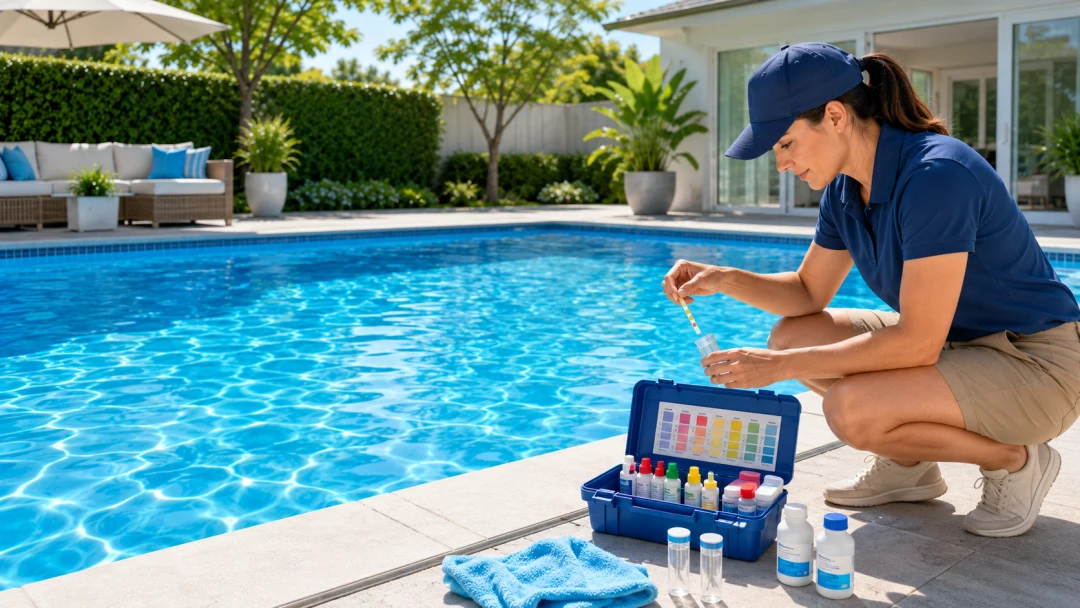
The best way to understand your pool's pH is to test it frequently. You can test pH with test strips, liquid test kits, or a digital tester. Test strips are quick and easy, while liquid testing may give a more detailed reading. A smartpHone reader may also help some people track results over time.
To get a good measure, take a water sample from below the surface, away from return jets, the skimmer, and any place where chemicals were recently added. Follow the instructions on the product and compare the result with the colour chart or digital reading.
Testing should include pH levels, chlorine, and alkalinity. Depending on the pool, you may also need to monitor calcium, minerals, CYA, and the saturation index. These factors can all influence pool water and help you find the cause of cloudy, green, or uncomfortable water.
How Often Should You Test pH?
During the swimming season, pH should usually be tested two or three times a week. If the pool is used daily, if the water temperature is high, or if heavy rain has dropped into the pool, it may need testing more often.
You should also test after adding chemicals, after topping up with water sources such as tap water, after a busy swimming day, and after leaves or debris enter the pool. Regular testing helps catch problems early and makes keeping the water clear much easier.
For a properly maintained pool, testing should become part of normal pool maintenance. It only takes a short time, but it helps avoid damage, discomfort, and overuse of chemicals. The goal is to keep your pool safe, clear, and ready to enjoy.
How to Raise pH
If pH is too low, you may need to raise pH using soda ash. Soda ash is commonly used to raise the pool's pH when the water is too acidic. If the product directions say to do so, add soda ash in small amounts and allow the pump to run so the water can circulate.
Baking soda, also known as sodium bicarbonate, is usually used to raise alkalinity rather than pH, although it can have some effect on pH. Baking soda can be useful when total alkalinity is low and the pool's pH is unstable. In some cases, baking soda may help bring the water closer to the ideal range.
When using soda ash, avoid adding too much at once. Add the correct dose based on pool size, wait for the water to mix, and then test again. Retesting is important because adding too much soda can lead to high pH and cloudy water.
How to Lower pH
If pH is too high, you may need to decrease it with an acid. Muriatic acid, also known as hydrochloric acid, is one option used to lower pH levels. Sodium bisulfate, also called dry acid, is another option. Dry acid can be easier to handle, but you should always follow the label instructions.
Muriatic acid is strong and should be used with care. Add it slowly and never mix it with other chemicals. Sodium bisulfate should also be measured carefully. Both products can help neutralize high pH, but incorrect use can cause dangerous reactions or damage.
After adding acid, allow circulation for the number of hours stated on the product before testing again. Do not add more acid too soon. The pool's pH can continue adjusting as the water mixes, so patience helps avoid overshooting into low pH.
What Causes Pool pH to Change?
Many factors can change the pool's pH. Rainwater, tap water, sweat, natural oils, sun cream, leaves, debris, heavy swimming use, and pool chemicals can all affect pH levels. Water temperature, poor circulation, and the type of chlorine used can also influence the result.
Some pool products raise pH, while others lower it. Liquid chlorine, calcium hypochlorite, and alkaline substances can cause pH to rise. Acid, dry acid, and carbon dioxide can lower pH. Other factors, such as water sources and minerals, may also affect the balance.
Because pH levels can change for so many reasons, one test does not tell the full story. Keeping a simple record helps you understand how your pool behaves. If you find that pH is always high or always low, it may be a sign that alkalinity or another part of the chemistry needs attention.
pH and Cloudy Water
Cloudy water is often linked to poor pH balance. When pH levels are too high, chlorine may not work properly, and fine particles can stay in the water. This can make the pool look dull even if the filter and pump are running.
If your pool turns cloudy, test pH first. Then check chlorine, alkalinity, the filter, and water flow. A cloudy pool may also be caused by poor circulation, algae beginning to form, or a build-up of minerals. Correcting the pool's pH can often help the water clear more quickly.
Keeping pH levels in range helps keep the water clear and reduces the chance of other common problems. It also helps chlorine stay effective, which supports clean and healthy swimming pool water.
pH and Swimmer Comfort
Balanced pH helps pool water feel better on the body. If the pool's pH is too high or too low, swimmers may notice red eyes, stinging eyes, dry skin, itchy skin, or general irritation. Poor pH can cause skin discomfort and may irritate sensitive areas.
Many people think chlorine alone is causing eye irritation, but poor pH balance is often part of the problem. If pH levels are outside the ideal range, the water can affect the skin and eyes even when chlorine levels seem correct.
Keeping the pool's pH level steady helps make swimming more comfortable for children, adults, and people with sensitive skin. It also helps create a better swimming experience for everyone using the pool.
pH and Pool Equipment
Pool equipment works best when the water is balanced. If pH levels stay low, acidic water can corrode metal parts and damage heaters, pumps, ladders, and fittings. This can lead to leaks, poor performance, and the need to replace equipment sooner than expected.
If pH levels stay high, scale can form inside pipes, filters, heaters, and other equipment. Scale can slow water flow and make the pump work harder. Over time, this can use more power and cost more money.
Balanced pH helps protect mechanical systems and reduces the chance of corrosion, scale, and damage. It also helps keep your pool running well throughout the year.
In this article: