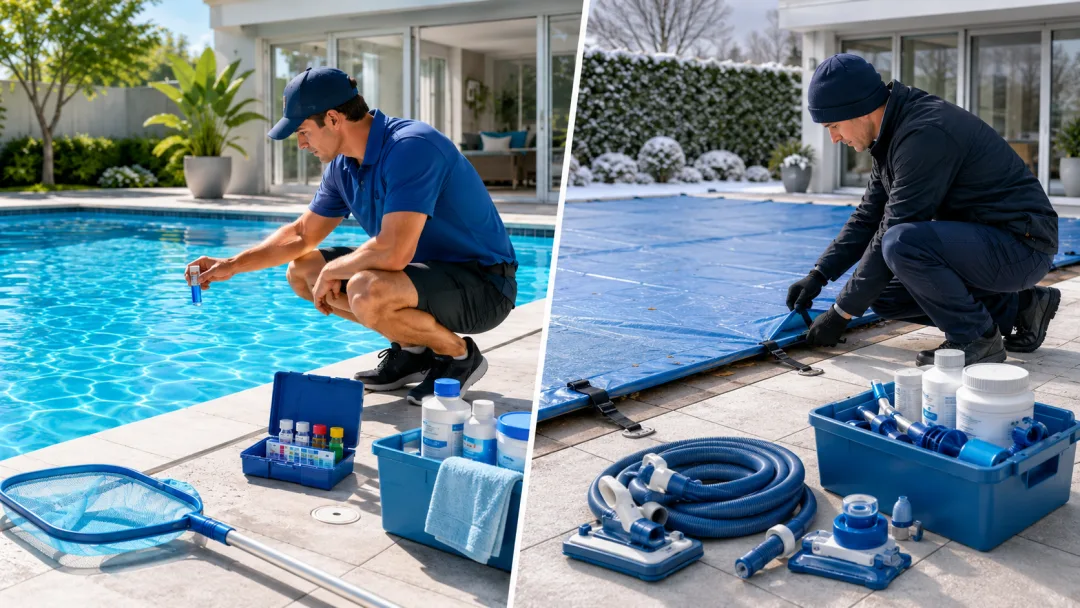
What Seasonal Pool Maintenance Should I Do Before Summer and Winter?
Seasonal pool maintenance is the care your pool needs as the weather changes through the year. A swimming pool needs different attention before summer, winter, spring, and autumn because temperatures, rainfall, sunlight, evaporation, debris, and swimming use all affect the water, equipment, and pool structure.
What Seasonal Pool Maintenance Should I Do Before Summer and Winter?
Seasonal pool maintenance helps keep your swimming pool clean, safe, and ready to use. Before summer, the aim is to prepare the pool for regular swimming, heavy use, strong sunlight, and the summer heat. Before winter, the aim is to protect the pool water, pool cover, pool equipment, and plumbing lines from freezing temperatures, dirt, algae growth, and potential damage during the colder months.
A good seasonal pool plan should include cleaning, a water chemistry test, filter care, equipment checks, shock treatment when needed, and regular checks during the off season. These essential steps can help pool owners reduce costly repairs, prevent damage, maintain water clarity, and keep the swimming pool in working order year round.
Why Seasonal Pool Maintenance Matters
Looking after your pool at the right time of year can prevent algae, cloudy water, blocked filters, poor water chemistry, low chlorine, staining, scaling, freeze damage, and damaged equipment. Seasonal pool maintenance also helps protect the pool floor, pool walls, liner, tiles, steps, ladders, diving boards, and the wider pool area.
Seasonal care can make a big difference to the cost and stress of pool maintenance. Small issues, such as leaks, cracks, tears in a cover, weak flow from return lines, or dirt in pump baskets, can become costly repairs if they are not fixed early. Regular maintenance also helps extend the life of the pump, filter, heater, and other pool equipment.
Good seasonal pool maintenance tips are simple to follow. Keep water clean, remove debris, test water chemistry frequently, adjust chemical levels when required, and make sure the pool cover is secure before the weather changes. This routine helps keep the swimming pool safe, clear, and easier to enjoy.
Preparing Your Pool Before Summer
Preparing your pool before summer begins is one of the most important parts of seasonal pool maintenance. When the weather warms, your swimming pool will usually face more sunlight, higher temperatures, more evaporation, and heavy usage. These conditions can increase chlorine demand, affect pH levels, reduce water clarity, and encourage algae growth if the pool maintenance routine is too low.
The first step in spring pool opening is to inspect the pool, check the pool cover, remove leaves, skim the surface, and make sure the water level is correct. A spring opening should also include testing, cleaning, shock treatment if needed, and a full check of the pump filter and heater before the swimming season begins.
Remove the Pool Cover Carefully
If your swimming pool has been covered through winter, carefully remove the pool cover so leaves, twigs, insects, dirt, and other debris do not fall into the pool water. A pool cover can collect winter debris, rain, and floating objects, so take your time and use a leaf net if there is a lot of debris on the surface.
After you remove the pool cover, clean it properly before storing it. The cover should be dry before storing, as this helps prevent staining, mould, and bad smells. If you use a winter pool cover or winter cover, inspect it for tears and replace it if it no longer fits the pool securely.
When storing a pool cover, choose a dry place away from sharp objects and strong sunlight. Keeping your pool cover in good condition can make the next winter pool closing easier and reduce the chance of debris entering the swimming pool during the off season.
Clear Leaves, Dirt, and Debris
Use a skimmer net to remove leaves, insects, twigs, and debris from the surface of the water. Then check the pool floor, pool walls, steps, corners, and around the skimmer. Removing debris early helps protect the filter, reduce bacteria, prevent algae growth, and maintain water clarity.
It is also a good idea to remove debris from around the pool area before the peak swimming season. Leaves and dirt can be blown back into the swimming pool, especially after wind or rainfall. Keeping the area clear makes cleaning easier and helps the pool stay ready for use.
Check the Water Level
The pool's water level should usually sit around the middle of the skimmer opening. If the water level is too low, the pump may draw in air and stop running efficiently. If the water level is too high, the skimmer may not remove surface debris properly.
Top up or drain the pool to the needed level before running the pump for long periods. In summer months, evaporation and heavy use can lower the water level, so check it frequently. Good water level control helps the filtration system work properly and helps maintain water quality.
Inspect the Pool Equipment
Before summer use, inspect the pump, filter, heater, valves, pipes, skimmer baskets, pump baskets, return lines, pool cleaner, and any other pool equipment. Look for leaks, cracks, signs of wear, loose parts, weak water flow, odd sounds, or equipment that is not operating as it should.
The pump filter and heater should be checked before the swimming season starts. A pool heater may need extra attention if it has not been used for several months. If the pump filter and heater are not in good working order, the pool may be harder to heat, filter, and maintain.
Need assistance finding swimming pool maintenance near you?
Get a QuoteClean Filters, Baskets, and the Filtration System
Clean filters are essential for clear water and good pool maintenance. A dirty filter cannot remove fine dirt, algae, bacteria, or small particles properly. Depending on your filter type, you may need to backwash, rinse cartridges, or replace parts as recommended by the maker.
Empty the skimmer baskets and pump baskets before running the system. Baskets full of leaves or debris can reduce flow and place stress on the pump. A clean filtration system helps keep the swimming pool water crystal clear and supports proper chemical balance.
Brush and Vacuum the Pool
Brush the pool walls, steps, corners, and floor to remove dirt, early algae, and staining. Focus on shaded areas, tiles, ladders, and places where water movement is low. Brushing helps loosen dirt so the filter and vacuum can remove it more easily.
After brushing, vacuum the pool to remove dirt from the pool floor. You may need to vacuum the pool more than once if there is heavy debris after winter. Regular vacuum cleaning helps maintain water, protect the surface, and keep the pool ready for swimming.
Test the Pool Water Before Swimming
Before anyone starts swimming, test the pool water carefully. A water chemistry test should check chlorine levels, pH, total alkalinity, calcium hardness, and stabiliser where used. Test water chemistry more frequently during hot weather, heavy use, or after heavy rain.
Good water chemistry is about more than clear water. Water can look clean while still being unsafe or uncomfortable for swimmers. Correct chemical balance helps chlorine work properly, protects pool equipment, and keeps the swimming pool safe.
Balance the Water and Add Chemicals Safely
Balanced water helps protect the pool structure, pool floor, pool walls, liner, pump, filter, heater, and fittings. It also helps maintain water clarity and keeps the water more comfortable for swimming. Adjust the pH, alkalinity, chlorine, and other chemicals slowly and carefully.
Add pool chemicals one at a time, follow the label, and let the pump run so the water can circulate. Never mix chemicals together. Test again after the chemicals have had time to work. This careful approach helps prevent cloudy water, staining, scaling, damage, and bacteria growth.
Shock the Pool When Needed
A pool shock treatment may be needed during spring opening if the chlorine is low, the water is cloudy, the swimming pool smells unpleasant, or algae has started to grow. Shock treatment raises chlorine quickly and can help eliminate bacteria and algae.
Always follow the shock product instructions and keep swimmers out of the pool until the water is safe again. Shock may also be needed after heavy use, strong sunlight, or heavy rainfall. Used properly, shock treatment can help restore water clarity and keep the water crystal clear.
Run the Pump and Check Circulation
Run the pump long enough to move and filter the pool water. Good circulation spreads chlorine and other chemicals, sends debris to the filter, and helps prevent algae growth. Check that water is returning strongly through the return lines.
If flow is weak, check the skimmer, baskets, filter, valves, and pump. Poor circulation can lead to cloudy water, algae, and extra strain on equipment. Keeping the system running efficiently is a key part of effective pool maintenance.
Set a Summer Pool Maintenance Routine
Once the swimming pool is open, regular maintenance will help keep it safe and enjoyable throughout the swimming season. Skim the surface often, brush the walls and floor, vacuum the pool each week, check the water level, and test the water several times a week.
During peak swimming season, heavy use, heat, and strong sunlight can reduce chlorine and affect water chemistry. You may need to run the pump longer, shock the pool more often, and clean the filter frequently. A steady summer pool maintenance routine helps maintain clear water and reduces the risk of costly repairs.
Preparing Your Pool Before Winter
Preparing your pool before winter protects the swimming pool during colder weather, freezing temperatures, and the off season. Even if the pool is not used, water chemistry, equipment, cover condition, and debris still need attention.
Winter pool care is especially important in areas where temperatures fall low enough for freezing. Water left inside pipes, the pump, the filter, or the heater can expand as ice forms. This can cause freeze damage, cracks, leaks, and costly repairs.
Clean the Pool Thoroughly Before Winter
Before winter, remove leaves, insects, dirt, and debris from the swimming pool. Brush the pool walls and floor, then vacuum the pool properly. A clean pool is much easier to protect during the winter months and much easier to open again in spring.
Dirt left in the water can cause staining, algae growth, and poor water quality. Removing debris before fitting the pool cover also helps prevent water from becoming dirty under the cover. This is an essential part of seasonal pool maintenance.
Test and Balance the Water Before Winter
Test the water before closing or reducing pool use. Check chlorine, pH, alkalinity, calcium hardness, and any other required chemical levels. Balanced water helps protect surfaces, equipment, and the pool structure throughout the winter.
If the balance is wrong, the water may cause scaling, corrosion, staining, or cloudy water by spring. Adjust the water carefully and allow it to circulate before fitting the pool cover. This helps maintain water quality during the colder months.
Add Winter Chemicals if Needed
Some pools benefit from winter chemicals before closing. These products can help control algae, bacteria, and water clarity during low-use periods. Use only chemicals that are suitable for your pool type and follow the instructions properly.
Do not add too much chlorine or shock without checking the guidance for your pool and cover. Some covers and surfaces can be affected by high chemical strength. If you are unsure, ask a professional for advice before adding anything to the water.
Lower the Water Level if Required
Some pools need the water level lowered before winter, especially where freezing temperatures are expected or where a winter pool cover requires a lower level. Do not drain the swimming pool too much unless your pool instructions say it is safe.
A water level that is too low can place pressure on the pool and may cause damage. A water level that is too high can stop the cover working correctly or allow rain and debris to enter the pool. The right level depends on the pool type, cover, and local weather conditions.
Protect the Pump, Filter, Heater, and Pipes
Pool equipment needs careful winter protection. The pump, filter, heater, valves, pipes, and plumbing lines may need to be drained, sealed, or covered to prevent freezing. This is one of the most important ways to prevent freeze damage and costly repairs.
In cold areas, water should not be left where it can freeze inside equipment. If you are not sure how to drain or protect the equipment safely, use a pool care professional. Correct winter protection helps keep the equipment ready for the next season.
Fit the Pool Cover Securely
A pool cover helps keep leaves, dirt, insects, and other debris out of the pool during the off season. It can also help reduce cleaning work and protect water quality. Choose a cover that is the right size and type for your swimming pool.
Fit the cover securely so wind, rain, and winter debris cannot lift it or push debris into the water. Weigh or fix the cover as recommended, but avoid anything that could tear it. Check the cover after heavy weather and remove leaves from the surface when needed.
Check the Pool During the Winter Months
Even when the pool is closed, regular checks are still needed. Look at the water level, cover, equipment, and water clarity. Remove leaves from the pool cover and check for signs of damage, standing water, or loose fittings.
Throughout the winter, rainfall can raise the water level, while evaporation can still lower it during dry periods. Freezing conditions can also place stress on the cover and equipment. Keeping an eye on the pool during the off season helps prevent water problems and makes spring opening easier.
In this article: