What Are Pool Safety Checks Every Homeowner Should Know?
A swimming pool can be a great addition to a home, especially during summer when the family wants a place for relaxation, exercise, and fun. However, every pool also brings responsibility. Pool safety checks are an important part of owning a pool because they help protect children, adults, guests, and pets. A backyard pool should be a safe place to swim, play, and cool off, but this only happens when homeowners pay attention to the water, equipment, pool area, and rules around the pool.
This comprehensive guide gives homeowners a closer look at the pool safety checklist they can use to inspect their pool regularly. Pool safety is not only about the water. It also includes the pool fence, pool barrier, gates, pool equipment, pool cover, pool deck, pool lights, chemicals, rescue equipment, and the way swimmers use the pool. By making sure each part is checked, maintained, and repaired when needed, pool owners can prevent accidents and enjoy greater peace of mind.
Why Pool Safety Checks Matter
Pool safety checks matter because small issues can quickly lead to accidents. A loose ladder, broken gate, cracked surface, cloudy water, or missing drain covers may seem minor at first, but these signs can create hazards if they are ignored. Regular inspection helps identify safety hazards early, before they cause injuries, drowning, costly repairs, or damage to the property.
When it comes to pool safety, homeowners should not wait until a problem is clear. A pool inspection can reveal potential hazards that are easy to miss during normal use. The leading cause of many pool incidents is not always one large fault. It is often a mix of poor supervision, weak access control, damaged equipment, and water that has not been cared for correctly.
A pool safety checklist also helps create a clear process. Instead of thinking about what to check each time, homeowners can follow regular steps. This makes pool maintenance easier and helps ensure the pool remains in good condition throughout the year.
Use a Pool Safety Checklist Before Anyone Swims
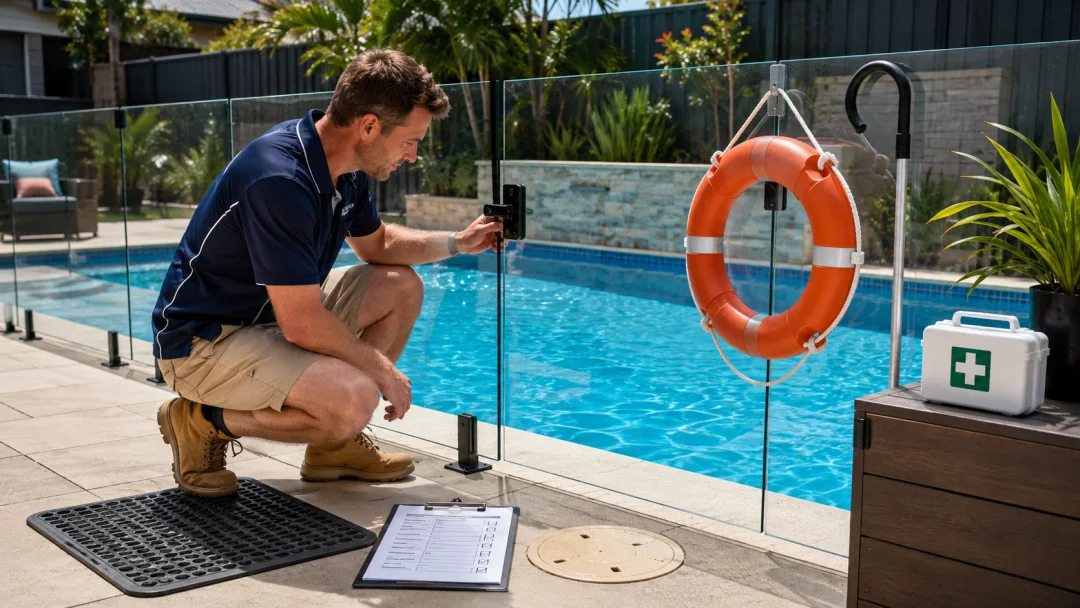
A simple pool safety checklist should be used before children, guests, or other swimmers enter the pool. Start by walking around the pool and looking for broken items, sharp edges, loose chairs, toys, leaves, dirt, cracks, and debris. Check that the pool fence is secure, the gates are self closing, and all access points are controlled. This first check can reduce the risk of trips, falls, and unsafe entry.
The checklist should also include water clarity, chlorine, pH levels, the pool cover, pool lights, drain covers, ladders, filters, pumps, and rescue equipment. If anything looks unsafe, do not allow anyone to swim until the issue has been addressed. Making sure these checks happen before use is one of the easiest ways to improve pool safety.
Check Pool Barriers, Fencing, and Access Points
A pool fence is one of the most important safety features for swimming pools. The fence should be sturdy, intact, and difficult for children to climb. Inspect the pool fence for loose panels, broken locks, gaps, rust, cracks, and signs of wear. If the fence is damaged, repair or replace the affected materials as soon as possible.
Every pool barrier should limit access to the water when adults are not watching. Check the pool barrier carefully, including gates, hinges, latches, and any nearby items that could help a child climb. Toys, bins, chairs, and plant pots should not be placed near the fence because they may make climbing easier.
Gates should close and latch without help. If gates are left open, stick, drag on the ground, or do not line up with the latch, they can give a false sense of security. Door alarms can also be useful where the house opens towards the pool area. Alarms do not replace a secure pool fence, but they can give adults extra warning in an emergency.
Keep the Pool Area Clear and Safe
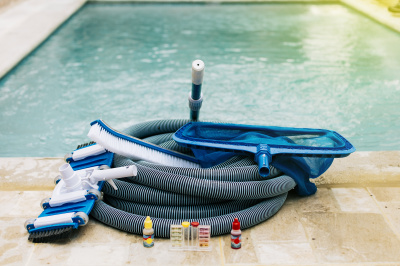
The pool area should be clear, tidy, and easy to walk through. Items around the pool, such as hoses, toys, floats, cleaning tools, net poles, and loose furniture, can create trip hazards. Remove dirt, leaves, and other debris from walkways, steps, and the pool deck so swimmers and guests can move safely.
Keeping the area around the pool clear also helps prevent children from being drawn towards the water. Bright toys left close to the edge can attract kids when adults are not watching. Store toys away after each swim and make sure they are not floating in the water when the pool is not in use.
Homeowners should also inspect the surrounding area for sharp edges, broken tiles, uneven finishes, damaged paving, and loose deck boards. Missing tiles, cracks, and worn surfaces can lead to cuts, trips, and falls. Repairing these issues early helps keep the pool area safe and protects the value and integrity of the pool.
Inspect the Pool Deck, Steps, Ladders, and Rails
The pool deck, steps, ladders, and handrails should be checked as part of every pool inspection. Wet surfaces can become slippery, especially when algae, oils, sun cream, or dirt are present. Cleaning and brushing these surfaces regularly can reduce slips and falls.
Inspect ladders for loose bolts, broken treads, rust, and movement. Ladders should feel secure when swimmers use them to enter or exit the pool. Rails should be firmly fixed and easy to hold. If any part moves, cracks, or feels weak, stop using it until it has been repaired.
Look closely at the pool floor and walls as well. A damaged pool floor can be hard to see if water clarity is poor. Cracks, stains, sharp edges, and broken surfaces should be addressed quickly because they can cause injury and may allow leaks to develop.
Need assistance finding swimming pool maintenance near you?
Get a QuoteMaintain Water Clarity and Test Water Quality
Clear swimming pool water is essential for pool safety. If the water is cloudy, it can be difficult to see the pool floor, drain covers, or a swimmer in distress. Water clarity also helps adults notice problems quickly. If the pool water looks dull, green, or milky, nobody should swim until the cause has been checked.
Testing water quality is a key part of pool maintenance. Use a test kit to check chlorine, water pH, alkalinity, and other levels recommended by the manufacturer. Many swimming pools work best when the ideal pH rating is between 7.2 and 7.6, but pool owners should always follow the advice for their own pool and chemicals.
Poor water balance can make chlorine ineffective. If water pH is too acidic, it may corrode equipment and irritate swimmers. If it is too alkaline, it may lead to scaling, cloudy water, and calcium salts building up on surfaces. Balanced levels help maintain water clarity, protect filters and pumps, and keep the water more comfortable.
Check Chlorine, Chemical Treatments, and Pool Chemicals
Chlorine helps control bacteria, algae, and contaminants in the pool. Check chlorine levels before swimming, after heavy use, and during hot weather. High heat and sunlight can reduce chlorine more quickly, so testing may be needed more often during summer. If the chlorine level is too low or too high, adjust it before anyone swims.
Pool chemicals must be handled carefully. Store pool chemicals in a cool, dry, well-ventilated place away from children, heat, sunlight, and moisture. Keep chemicals in their original containers and do not move them into unlabelled bottles. Different pool chemicals should be kept in separate containers because mixing them can be dangerous.
When adding chemical treatments, read the label, wear protection if required, and use the correct amount. Shock treatment may be needed if algae, cloudy water, or poor chlorine readings occur. After adding shock or other chemicals, allow the water to circulate and test again before allowing swimmers back into the pool.
Inspect Filters, Pumps, and the Filtration System
The filtration system keeps water moving and helps remove dirt, leaves, oils, and small particles. Pool maintenance should include regular checks of filters, pumps, pipes, valves, and the pool's filter pressure. If filters are blocked or pumps are not functioning properly, water quality can drop quickly.
Inspect pumps for leaks, unusual noises, weak flow, air bubbles, and signs of overheating. Pumps should run smoothly and should not smell hot or make grinding sounds. If you notice unusual noises or leaks, turn the equipment off and contact a professional before the damage becomes worse.
Filters also need cleaning, rinsing, or backwashing depending on the type. Dirty filters can make cleaning ineffective and may prevent the pool from staying clear. Check skimmer baskets and pump baskets often, especially when leaves, debris, or insects are common. Emptying skimmer baskets helps remove dirt and keeps water moving through the filters.
Check Drain Covers and Suction Areas
Drain covers are a vital pool safety feature. Missing, cracked, loose, or broken drain covers can create a serious risk, especially for children. Inspect drain covers regularly and make sure they are firmly fixed, smooth, and made for their intended use.
If drain covers are damaged, do not allow anyone to swim until they are replaced. A pool inspector can examine drain covers, suction points, and related components as part of a full pool inspection. This is especially important for older swimming pools or pools that have had renovations.
Pool owners should also teach children not to sit, play, or place hands near drain covers. Clear rules around drains reduce risk and help swimmers understand why some parts of the pool should not be touched.
Check the Pool Cover and Safety Covers
A pool cover can help keep debris out of the water and reduce cleaning, but it must be used correctly. Inspect the pool cover for rips, tears, weak straps, loose anchors, and damage. A damaged cover can be unsafe and may not support a child's weight, even if it looks strong from a distance.
Safety covers should be fitted securely and used in line with the manufacturer's instructions. Never treat safety covers as a replacement for supervision, a pool fence, or a proper pool barrier. A cover can provide extra protection, but relying on it alone can create a false sense of safety.
Remove standing water, leaves, and debris from the cover before opening it. If the pool cover is heavy, damaged, or difficult to move, repair or replace it. Making sure the cover works well helps protect the pool and makes regular maintenance easier.
Inspect Pool Lights and Electrical Equipment
Pool lights help swimmers see the water, steps, pool floor, and edges when light is low. Check pool lights, path lights, switches, timers, and outdoor sockets for signs of damage. Broken pool lights should be repaired safely by a qualified person, not by someone without the right skills.
Electrical equipment near water must be treated with care. Pumps, heaters, lights, and control boxes should be checked for cracks, loose fittings, exposed wires, and water marks. Never touch damaged machinery or electrical equipment when wet. If there is any doubt, arrange a professional inspection.
The plant room should also be organised and dry. Pool equipment, chemicals, tools, and cleaning items should have a proper place. Keeping equipment stored safely makes servicing easier and helps prevent accidents.
Keep Rescue Equipment and First Aid Ready
Rescue equipment should be easy to reach and ready to use in emergency situations. A life ring, reaching pole, and first aid kit should be kept close to the pool but out of the way of normal walking areas. Everyone in the household should know where these items are and how to use them.
The first aid kit should be checked often and topped up when items are used or expired. In an emergency, time matters. Being prepared can help adults take action quickly if an incident happens. It is also wise for adults to learn first aid and basic water rescue steps.
Pool owners should not store rescue items in locked rooms or behind furniture. Equipment should be visible, easy to reach, and ready at all times. This can provide peace of mind when family and friends visit.
Set Clear Rules for Swimmers, Children, and Guests
Clear pool rules help swimmers know what is safe. Rules may include no running, no pushing, no glass near the pool, no swimming alone, and no diving in shallow water. Children, guests, and adults should all follow the same rules every time they swim.
Kids should learn that a pool is not a place for rough play. Adults should be watching children closely, not reading, using a phone, or leaving the pool area. Swimming aids and toys do not replace supervision. Good swimming skills help children, but they do not remove the need for careful watching.
Guests should be told about the depth, steps, exit points, diving rules, and any areas that are out of bounds. If people are visiting from public pools, they may expect different rules. Home swimming pools need clear household rules because there may not be a lifeguard present.
Check Diving Boards, Slides, and Play Equipment
Diving boards and slides need special attention because they can increase the risk of injuries if they are damaged or used in the wrong way. Inspect diving boards for cracks, loose fixings, worn surfaces, and signs of movement. Diving should only be allowed where the pool is deep enough and designed for it.
Slides should be secure, smooth, and used only as intended. Check fixings, steps, rails, and the landing area. Children should not climb up slides the wrong way or use toys on them. Clear rules help prevent accidents and keep play safe.
Pool toys, rings, floats, and other items should be checked for damage and removed from the water after use. Leaving rings or toys in the water can attract children back to the pool when adults are not present.
In this article: