What Are the Different Types of Ceiling Mouldings?
Ceiling mouldings, often known as coving, are the trim pieces that sit neatly where the wall meets the ceiling. They frame a room, soften hard angles and bring a finished look that plain paint cannot match.
People choose mouldings for many reasons. Some want to highlight the character of an older property. Others want a simple border that stops a modern room from feeling bare. Many also use coving to hide hairline cracks or uneven joins, which is a practical bonus. With careful selection, mouldings can make ceilings feel higher and rooms feel calmer.
This guide explains the different types of ceiling mouldings, the styles you will see most often, how traditional designs compare with modern ones, which materials are available and where coving tends to look best in the home. The aim is to help you pick a style that fits your taste, your budget and the way you live day to day.
Popular Styles of Ceiling Mouldings
There are many profiles to explore. Some mouldings are plain and crisp, while others have rich detail. The right choice depends on what you want the room to say.
Plain Coving
Plain coving has a smooth curve or a gentle angle with no pattern. It gives a clean line around the room and works well with simple décor. Because there is no heavy detail, it does not grab attention. This helps busy spaces like kitchens feel ordered and clear. It also suits small rooms where a large pattern might feel cramped.
Fitting plain coving is usually straightforward. Lightweight versions in polyurethane or polystyrene can be cut with hand tools and fixed with adhesive, which keeps mess and time to a minimum. Once painted the same colour as the ceiling, the moulding blends in and the joins almost vanish. The result is smart and subtle, a tidy frame that lets furniture and art stand out.
Ornate Mouldings
Ornate mouldings carry carved leaves, beads, rope twists or scrolls. They echo the cornices found in Victorian and Georgian homes and bring a touch of ceremony to a room. When matched with picture rails, ceiling roses and tall skirting, they build a layered look that feels rich and well considered. Even a modest hallway can gain presence with a decorative cornice.
Because detail adds depth, ornate profiles tend to look best in rooms with higher ceilings. They can also frame statement lights or chandeliers, drawing the eye up and making the space feel grand. If your home is newer, you can still use a decorative design. Choose a slimmer profile so the pattern reads clearly without overpowering the walls.
Egg and Dart Style
Egg and dart is a famous classical motif. It repeats an oval shape next to a pointed dart, creating a steady rhythm around the perimeter of the room. This style suits formal dining rooms, bay-fronted lounges and stairwells where you want a sense of tradition. When painted in the same tone as the ceiling, the pattern feels refined rather than busy.
Many versions exist, from fine and narrow to deep and bold. If you like the idea but fear it may be too heavy, pick a shallow variant. You keep the historic feel while staying light on the eye. Pairing egg and dart with a plain ceiling rose can balance the detail and keep the scheme from feeling fussy.
Stepped Designs
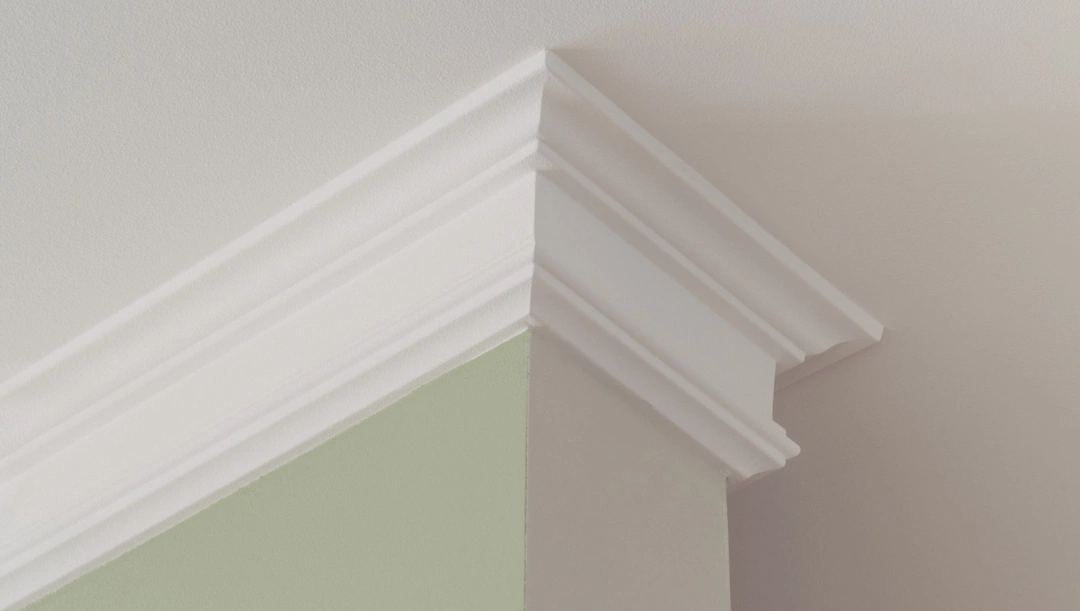
Stepped coving uses straight lines to form small ledges or tiers. The profile looks geometric and neat, so it suits modern interiors and mid century schemes. Because the edges are sharp, the shadow they cast is crisp. This can make ceilings look a little higher, which is helpful in compact rooms and flats.
These designs partner well with spotlights and slimline pendants. They also sit happily beside square architraves and skirting, helping the whole room feel coherent. If you have a contemporary kitchen with flat fronted units, a stepped moulding echoes those shapes and ties everything together without fuss.
Need assistance finding coving, cornice and mouldings near you?
Get a QuoteTraditional vs Modern Moulding Designs
Traditional designs usually carry curves, leaves, beads or fluting. They come from classical architecture and suit period homes that already have sash windows, panelled doors and cast iron radiators. In such settings a decorative cornice feels like it belongs. It can restore missing detail after a refurbishment and make new plasterwork feel established.
Modern designs are simpler. They use straight lines, soft arcs and smooth planes to give a crisp finish. This approach is useful when your furniture, flooring and lighting are contemporary and you want the walls and ceiling to frame them quietly. Simple coving hides minor cracks and joins, which keeps the room calm without adding visual noise.
Choosing the Right Material for Ceiling Mouldings
There are four common materials to consider: plaster, polyurethane, polystyrene and timber. Each has strengths that suit different budgets and skill levels. Your choice will depend on how much detail you want, how confident you are with tools and whether weight is an issue for your ceilings.
Plaster is the classic option. It allows very crisp detail and ages gracefully once painted. The trade off is weight and cost. Plaster sections are heavier, which means they need firm fixing and more hands to lift. Professional installation is often wise, particularly for large rooms or intricate patterns. If you are restoring a period home, plaster is usually the right call.
Polyurethane and high density polystyrene are light, stable and easy to cut. They take paint well and are popular for do it yourself projects because they can be installed with adhesive and a careful mitre. While they may not feel as solid as plaster, the finished look is excellent in most homes. Timber offers a different mood, adding warmth and grain. It suits cottages and spaces where you want a natural touch, although it needs sealing against moisture.
Where Ceiling Mouldings Work Best in the Home
Coving can enhance most rooms if you match the scale to the space. Think about ceiling height, the style of your doors and skirting and how much light the room gets. Using the same profile throughout a floor helps spaces feel linked, while varying the size from room to room keeps things in proportion.
Living Rooms and Lounges
Living rooms benefit from mouldings because they are social spaces that deserve a polished finish. A plain profile will tidy the ceiling line in a modern scheme, while an ornate cornice can lift a period fireplace and balance tall bookcases. If your layout is open plan, repeating the same coving through the seating and dining areas ties the zones together and makes the whole area feel intentional.
Lighting matters too. A ceiling rose paired with coving draws attention to a pendant over the coffee table. In a media wall setup, simple coving gives a clean edge so the television and storage look built in rather than added later. Keep colours consistent and the room will feel calm even when the furniture mix is bold.
Bedrooms
Bedrooms call for a softer touch. Slim plain coving brings a gentle curve that relaxes the eye at the end of the day. If you enjoy pattern, a light bead or small leaf can add interest without crowding the headboard. Matching the coving to the ceiling colour keeps the look restful and helps the edges recede.
For small box rooms, choose a narrow profile so floor area remains the focus. In larger principal bedrooms, a deeper cornice can suit tall wardrobes and layered curtains. Add a modest ceiling rose to frame a shaded pendant and the space will feel composed without becoming formal.
Hallways and Entrances
Hallways are first impressions. A neat run of coving gives instant order and leads the eye from the front door through to the rooms beyond. In older terraces where ceilings can be uneven, mouldings help disguise changes and make lines feel straight. This is useful when walls have been skimmed at different times.
Because halls are narrow, pick a profile that does not jut out too far. Plain or stepped designs work well and are easy to keep clean. If you add picture rails, keep the gap between rail and cornice even along the run. The result is a tidy entrance that sets the tone for the rest of the home.
In this article: